

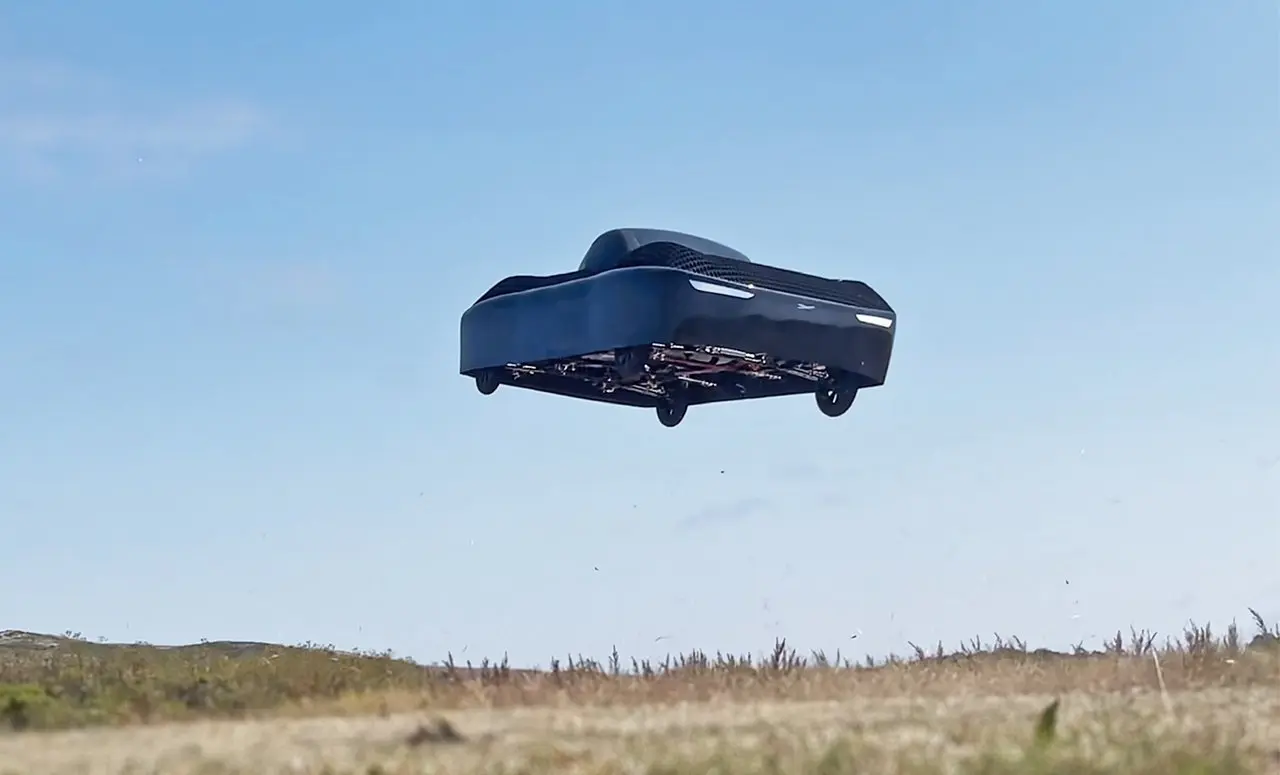
In 2015, four friends gathered in a Palo Alto café and began sketching an idea that seemed more like science fiction than science: a real flying car. Ten years later, that napkin sketch has taken flight. Today, Alef Aeronautics—a San Mateo-based company—is making headlines by bringing its dream to reality, with operations at Half Moon Bay and Hollister airports.
A Vision Beyond Traffic
Alef calls its creation the world’s “first true flying car,” a road-legal passenger vehicle that can drive like any other car yet lift off vertically without a runway. The company describes the novelty as “integrating a car into the aviation infrastructure and air traffic,” a feat that positions it at the frontier of sustainable mobility.
CEO Jim Dukhovny captures the larger mission simply:
“Electric aviation is more environmentally friendly, quieter, and requires less space.”
For commuters weary of gridlock, the promise is profound. With a driving range of 200 miles and a flight range of 110 miles, the Alef Model A is built to “alleviate the burden of urban congestion” by rising above it.

A Decade in the Making
The founding team—Dr. Constantine Kisly (VP of Engineering), Oleg Petrov (VP of R&D), Pavel Markin (VP of Electronics), and Jim Dukhovny (CEO)—bring over 70 years of combined engineering experience. Since 2019, they’ve been test-driving and flying prototypes, refining designs to balance safety, efficiency, and elegance.
Their perseverance has yielded recognition. Alef earned the FAA’s Special Airworthiness Certificate, becoming the first car with vertical takeoff permission to fly in U.S. skies. It was also named one of Time’s top innovations of 2024.
The journey has attracted investors too. Venture capitalist Tim Draper, an early backer of Tesla, saw the same disruptive potential in Alef’s vision.

Safety Meets Wonder
While the idea of a car soaring over freeways may spark childlike wonder, Alef grounds its innovation in meticulous safety. The Model A features distributed electric propulsion, multiple redundancies, real-time diagnostics, obstacle detection, glide landing, and even a full-vehicle ballistic parachute.
Crucially, it does this without the noise or exposed propellers typical of many aerial vehicles. The gimbaled cabin and elevon system ensure stability, allowing passengers to travel smoothly whether on the road or in the sky.

Milestones and Horizons
Launching operations at airports marks a new chapter. “Working in safe, controlled, non-towered airport environments will help Alef, FAA, airport operators, and pilots see how this will work in the future at scale,” the company explained.
The first consumer-ready Alef Model A, priced at $300,000, is already available for pre-order. Longer term, the company aims for accessibility: the Alef Model Z, projected for 2035, envisions a four-person sedan priced at $35,000, with ranges that rival today’s most advanced electric cars.

From Fiction to Flight
Alef often references its cultural inspiration:
“Fictional was: Marty McFly, a character from Back To The Future, traveled to the ‘future’ of October 2015. Real was: 4 founders decided to form a company to build a real flying car.”
That bridge from fiction to reality is what makes Alef’s story so inspiring. What once seemed like a Hollywood fantasy is now rolling—and rising—into our everyday world.
As the company prepares to make its flying cars available to the public in the coming months, one truth is undeniable: the future isn’t waiting. It’s taking off.
Subscribe to The Bright Story and step into a world of hope, wonder, and humanity at its best. With unlimited access, discover powerful personal journeys, heartwarming family and animal stories, incredible discoveries, and the everyday kindness that makes life brighter.