

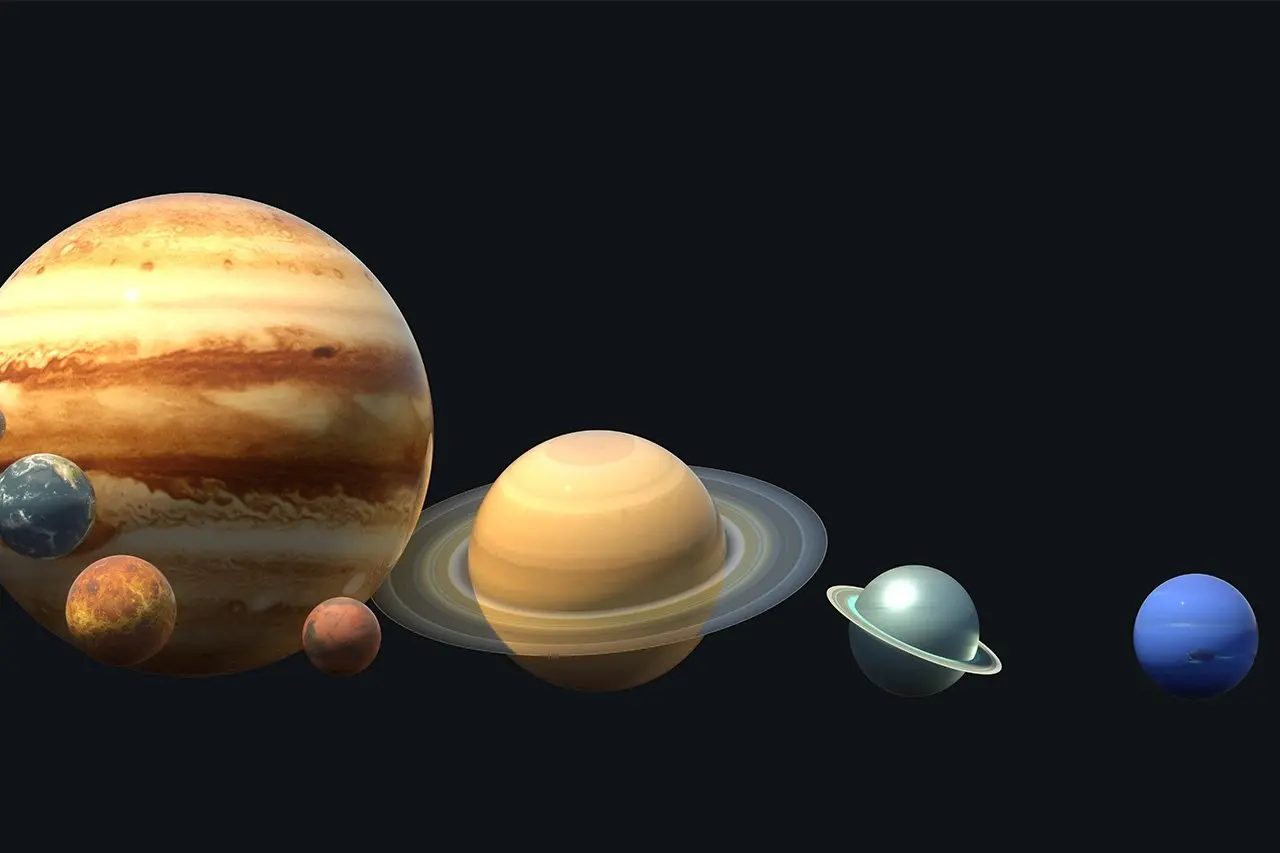
If you're a morning person — or even if you're not — August 2025 is offering a cosmic show worth setting an alarm for. Six planets and the moon will stretch across the early morning sky in a striking alignment, often referred to as a planet parade. While this isn’t the first such event of the year, it’s one of the most anticipated — especially on a few key dates when the sky becomes a stage for one of nature’s most elegant performances.
And no, you don’t need to be an expert to enjoy it. But knowing what to look for — and when — will help you make the most of the view.
Early August: Opening Acts in the East and South
Before the main event mid-month, the early days of August begin to set the scene.
According to the BBC and Farmers’ Almanac, Venus will blaze brightly in the eastern sky before sunrise. Just below it, Jupiter is reemerging after its recent conjunction with the sun and will be visible low in the east-northeast.
To the south, Saturn stands tall with Neptune nearby, while Uranus lingers in the east near the Pleiades and Hyades star clusters. While Neptune and Uranus won’t be visible to the naked eye, a telescope or strong binoculars will reveal them as part of the building planetary arc.
Mars, however, won’t be participating. As the BBC notes, it’s currently too close to the sun to be seen from Earth.
Mid-August: Planets Draw Closer, Skies Grow Darker
The spectacle intensifies around Aug. 10. Venus and Jupiter appear closer together with each passing morning, leading up to a stunning conjunction on Aug. 12 — when they will seem to nearly touch in the sky, like twin jewels just above the horizon.
Meanwhile, Uranus gradually shifts below the Pleiades, making it easier to spot with binoculars as the skies darken.
High in the southern sky, Saturn becomes more prominent, with Neptune continuing to shadow it. If you’ve got a telescope and steady hands, this is a great time to catch a glimpse of that distant blue planet.
Aug. 18: The Parade in Full Glory
Mark your calendar — Aug. 18 is the main event.
That morning, the sky will offer a panoramic arc featuring Mercury, Venus, Jupiter, the moon, and — higher up — Uranus, with Saturn and Neptune visible to the south. According to the BBC, this rare moment places six planets and the moon above the horizon at once.
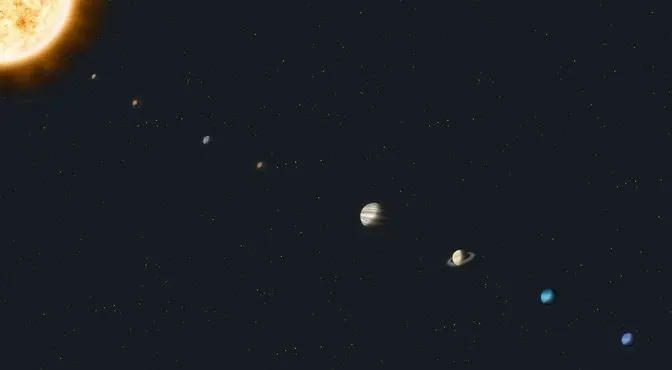
Mercury will be low on the eastern horizon and difficult to spot, but worth the effort. Venus and Jupiter will shine brightly just above, with a crescent moon gracefully nestled between them. Uranus will be farther up in the east-southeast, while Saturn and Neptune add balance from the southern sky.
Farmers’ Almanac calls it a “picture-perfect parade,” and it’s a prime opportunity for skywatchers and photographers alike.
Aug. 19–21: Shifting Shapes and Moon Magic
Although the peak of the parade is Aug. 18, the following mornings will still offer striking views.
On Aug. 19, the moon drifts eastward, slightly disrupting the alignment. On Aug. 20, it forms a vivid triangle with Venus and Jupiter. By Aug. 21, the moon will hover just above Mercury — a final visual treat for early risers, according to the BBC.
How It Compares to February’s Parade
You might wonder how August’s parade stacks up against the one in February.
While February’s event may have been easier to view — thanks to darker evening skies and the inclusion of Mars — August’s version brings its own allure. The Venus–Jupiter conjunction, the presence of the moon, and the near-complete planetary arc offer a uniquely beautiful display.
Why These Parades Happen
Planetary alignments, as explained by the BBC and Farmers’ Almanac, occur because the planets orbit the sun along a similar plane called the ecliptic. From Earth’s perspective, they occasionally appear to line up — even though they remain millions of miles apart.
Tips for Best Viewing
To make the most of this event:
- Begin observing at least 45 minutes before sunrise.
- Find a location with a flat, unobstructed eastern horizon.
- Use a stargazing app to help locate planets.
- Never look through binoculars or a telescope near sunrise — serious eye damage can result.
If you’re south of 40°N latitude, such as in the southern United States, conditions will be especially favorable. Planets will rise higher and remain visible longer in the dark sky.
Final Thoughts
Whether you’re a seasoned astronomer or simply someone who enjoys looking up, August’s planet parade offers a rare and awe-inspiring moment. It’s a quiet, fleeting performance in the predawn sky — one that rewards patience, curiosity and, perhaps, a little caffeine.
And if you do catch it, take a moment to simply pause and appreciate it. After all, the solar system doesn’t line up like this every day.
Subscribe to The Bright Story and step into a world of hope, wonder, and humanity at its best. With unlimited access, discover powerful personal journeys, heartwarming family and animal stories, incredible discoveries, and the everyday kindness that makes life brighter.