

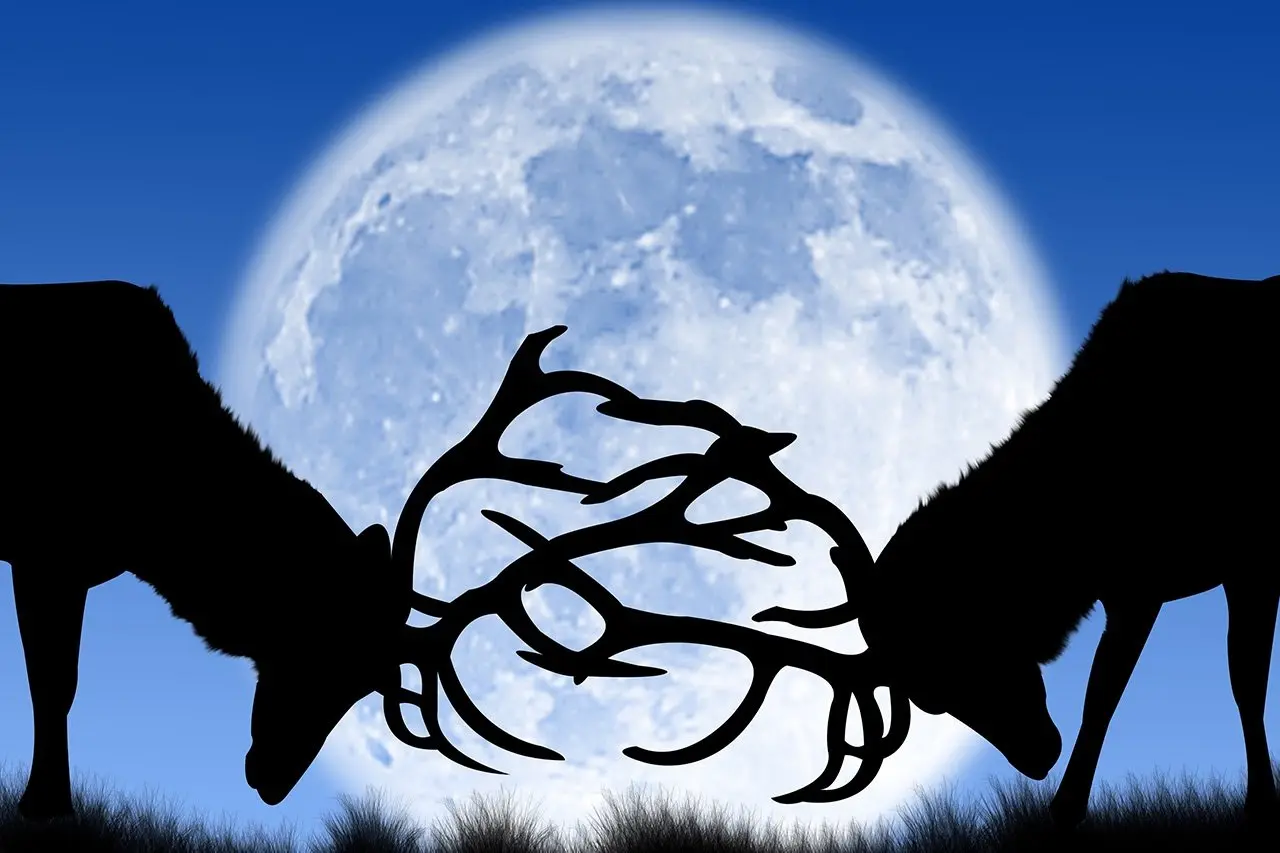
As summer reaches its midpoint in the Northern Hemisphere, a full moon will rise with a name rooted in seasonal transformation and ancient tradition: the Buck Moon. This July, skywatchers can witness a moon that glows low on the horizon, tinted rust-red by the atmosphere and steeped in centuries of folklore.
When to See the Full Buck Moon
According to the Old Farmer’s Almanac, the full Buck Moon will reach peak illumination on Thursday, July 10, 2025, at 4:37 p.m. EDT. While it won’t be visible at that exact moment in much of North America, it will rise that evening just after sunset in the southeast sky and remain visible through the night.

Because the July full moon follows a low arc across the summer sky, it stays close to the horizon — a position that enhances its reddish hue. The coloration, much like a vibrant sunset, is caused by the scattering of light through Earth’s thick lower atmosphere.
Why It’s Called the Buck Moon
The July full moon gets its name from an observable event in nature. As the Old Farmer’s Almanac explains, “this is the time when the antlers of male deer (bucks) are in full-growth mode.” Triggered by long summer days and high testosterone levels, buck antlers develop rapidly in velvet — a fuzzy skin rich in blood vessels.
This behavior, noted by Native American and colonial observers alike, gave rise to the name Buck Moon. But it’s not the only name the July moon has carried through time.
Other Traditional Names
Drawing from Native American, European and Asian traditions, the Old Farmer’s Almanac lists a variety of alternate names for the July moon:
Thunder Moon — Named for summer’s frequent thunderstorms.
Hay Moon — A reference to the season’s hay harvest in Europe.
Salmon Moon — Used by tribes in the Pacific Northwest during salmon migration.
Ripe Corn Moon, Berry Moon and Mead Moon — Each reflecting the abundance of midsummer.
These names, rooted in agricultural and natural cycles, reveal how deeply lunar phases were once tied to survival, ceremony and community.
Viewing Tips
The Buck Moon can be seen without any equipment. However, according to the Old Farmer’s Almanac, using binoculars can help highlight details such as shadows cast by craters and ridges. Even if you miss the exact moment of fullness, the moon will appear full for a day before and after July 10.

This full moon will also rise beneath the Summer Triangle, a trio of bright stars — Vega, Deneb and Altair — that dominate midsummer skies. It’s a fitting celestial backdrop for a moon already rich in meaning.
A Celestial Marker of Summer’s Peak
Whether you’re a seasoned stargazer or someone who simply glances up in wonder, the full Buck Moon is more than a pretty sight — it’s a reminder of the deep connection between Earth and sky. Through generations, cultures have looked to this moon as a marker of fertility, harvest, storms or spirits.
As July 10 approaches, consider stepping outside, looking east and honoring a rhythm that predates calendars and clocks. As the Old Farmer’s Almanac reminds us, the Buck Moon is a timeless companion in the night sky — one that still speaks, if we’re willing to listen.
Enjoying the article? Subscribe to GJW+ Premium to unlock award-winning drama, Three Stooges comedy, and powerful documentaries — and support this channel. Don’t miss out, it’s a limited-time offer. Start today!
