


Each year, millions of seniors experience falls that can lead to serious injuries, hospital stays, or loss of independence. But what if there were one simple exercise—safe, effective, and proven by science—that could significantly lower your risk? You don’t need fancy equipment or hours at the gym. You just need a few minutes, some focus, and your heels.
Start With a Simple Morning Stretch
Do you wake up with heel or foot pain? Before your feet even touch the floor, try this gentle stretch:
- Sit on the edge of your bed.
- Extend one leg at a time.
- Point your toes up toward you.
- Feel the stretch through your calves, hamstrings, and the soles of your feet.
- Hold for 5 seconds, relax, and repeat 10–15 times.
This warm-up helps loosen tight muscles that affect balance and walking. It’s a great way to wake up your lower body.
The Easy Heel Raise: A Balance Game-Changer
The foundation of fall prevention starts here:
- Stand on a flat surface with feet shoulder-width apart.
- Lightly hold onto a chair or countertop for balance.
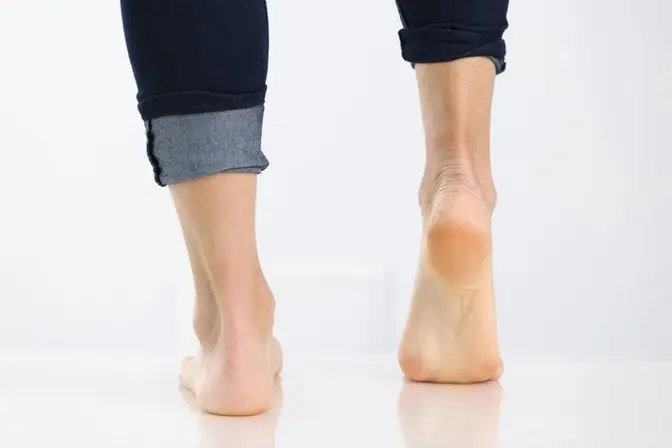
- Slowly raise your heels off the ground.
- Hold for 2–3 seconds, then lower back down with control.
- Perform 3 sets of 10 slow, steady reps.
This basic movement strengthens the calf and ankle muscles—key players in walking, turning, and stabilizing on uneven surfaces.
Backed by Science: A study in the Journal of Geriatric Physical Therapy found that calf exercises significantly improved balance and reduced fall risk in older adults.
Level Up: Add Resistance for Faster Progress
Once the basic heel raise feels easy, add some resistance:
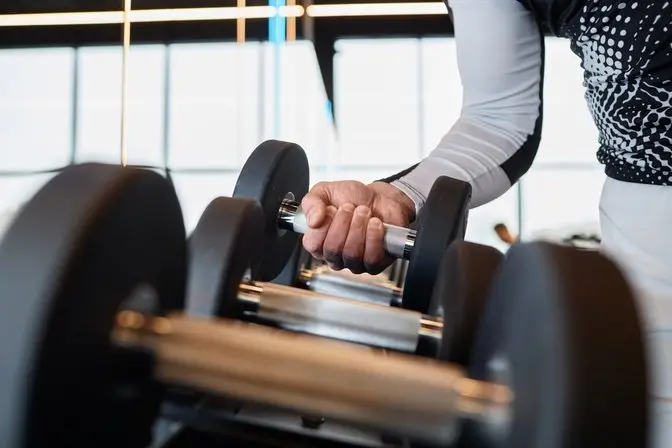
- Hold light dumbbells, a backpack, or water bottles.
- Raise your heels slowly: 2 seconds up, 2 seconds down.
- Try different toe positions:
- Toes outward → targets inner calves
- Toes inward → targets outer calves
- Toes straight → targets full calf
This small change increases the challenge and leads to faster strength gains—without needing gym machines.
Balance Off? Use This Safer Version
If you're just starting out or feel unsteady:
- Stand near a wall or counter.
- Lightly touch it for support.
- Perform slow heel raises—just like before, but with extra stability.
Even this version strengthens your stabilizing muscles and improves balance over time, all while staying safe.
2022 Research: A study in Aging Clinical and Experimental Research showed that simple balance exercises can reduce fall risk by up to 30%.
Boost Your Stability: One-Leg Heel Raises
When you're ready, challenge your control with this advanced move:
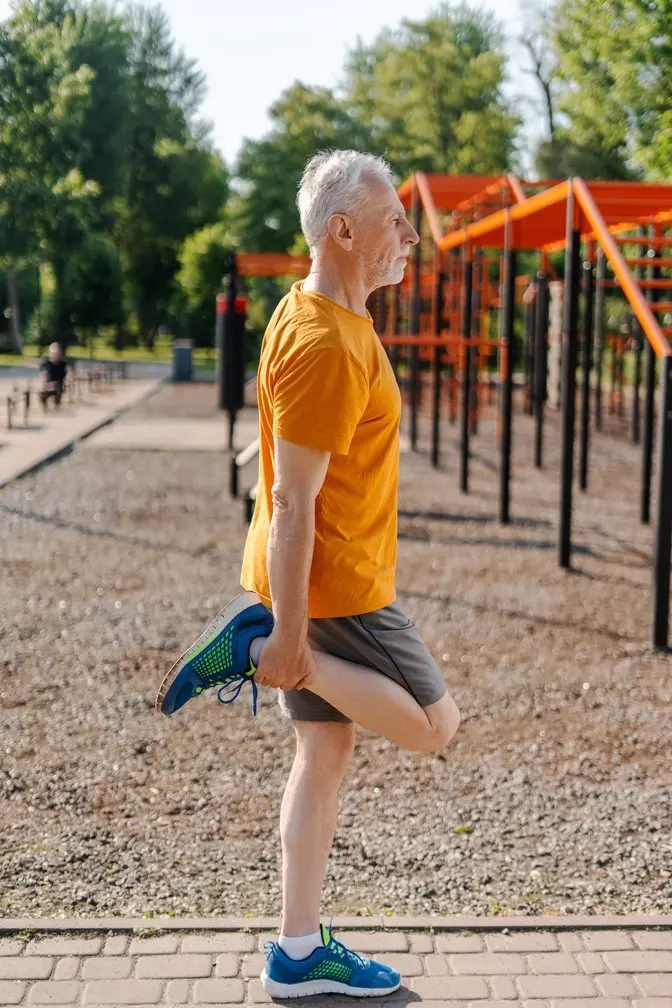
- Stand on one leg.
- Slowly raise your heel, hold for a second, and lower it.
- Switch legs after 5–8 reps.
This targets each leg individually, improves coordination, and builds “real-life strength” that helps with stairs, curbs, and sudden shifts in movement.
Tip: Keep both sides balanced. You should be within 2–3 reps between each leg for symmetrical strength.
Take the 7-Day Calf Challenge
Build lasting strength and stability with this quick daily routine:
Day 1–2:
- Basic heel raises: 3 sets of 10 reps.
Day 3–4:
- Add weight using bottles, cans, or a backpack.
Day 5–6:
- Try single-leg heel raises.
Day 7:
- Repeat your strongest version and reflect on how much better you feel.
This plan takes only 3–5 minutes a day. That’s a tiny investment for a big reward: improved strength, balance, and confidence.
CDC Says: Strength and balance exercises done 3x a week can reduce fall risk by over 35%.
Stay Safe, Stay Strong
Before starting any new exercise, especially if you have health concerns or mobility issues, check in with your doctor or physical therapist. Use support when needed, go slowly, and listen to your body.
✅ Take Action Today
Start with just one set of heel raises. Share this with a loved one who could benefit. Whether you're 60 or 90, small consistent steps can lead to big improvements in how you move, walk, and live confidently.