

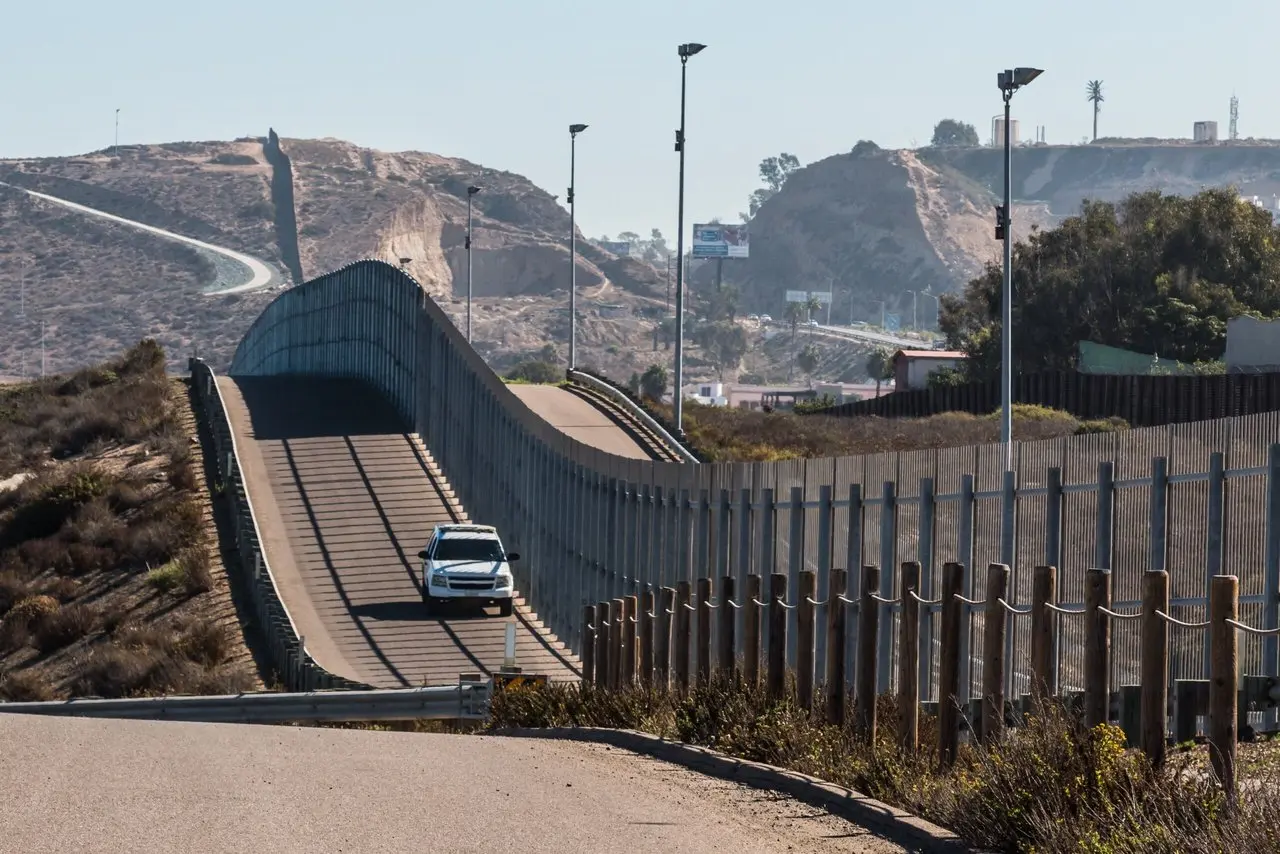
A directive from President Trump now has military intelligence satellites focused on the U.S.-Mexico border amid a national emergency declaration.
By yourNEWS Media Newsroom
President Donald Trump has ordered two U.S. military intelligence agencies to deploy satellite surveillance capabilities over the U.S.-Mexico border, escalating efforts to combat illegal immigration and drug trafficking as part of a broader crackdown. The initiative, which has not been previously disclosed, involves the National Geospatial-Intelligence Agency (NGA) and the National Reconnaissance Office (NRO), both operating under the Department of Defense.
The National Geospatial-Intelligence Agency acknowledged the creation of a special task force “to coordinate its support to the U.S. border mission,” while the National Reconnaissance Office confirmed that it was working with the intelligence community and the Pentagon “to secure U.S. borders.”
The agencies, historically responsible for battlefield reconnaissance and global intelligence operations, are now being redirected to domestic surveillance in support of Trump’s national emergency order. The use of these tools aims to assist in identifying illegal border crossings and cartel activity along key corridors. While the extent of surveillance over U.S. soil remains unclear, sources familiar with the directive said artificial intelligence would be used to process satellite images and identify individuals or objects of interest in near real-time.
Though current law restricts intelligence collection on U.S. persons, an exception under 49 CFR § 391.11(b)(2) allows immigration authorities to operate within 100 miles of any U.S. border. That buffer includes major cities such as San Diego and El Paso. Paul Rosenzweig, a legal expert on national security, stated, “If they follow the law, these agencies should only collect on the other side of the border in foreign territory. But how they implement that, and if they do, are legitimate oversight questions.”
A spokesperson for the Office of the Director of National Intelligence emphasized that all intelligence activities are “legal and authorized” and are conducted in a way that protects U.S. civil liberties.
Reuters reported that the White House and the Department of Defense declined to comment on the record. It also remains unknown whether other agencies, such as the CIA, are playing any role. One source close to the initiative clarified that “once foreign criminals are inside the United States, they are not within the purview of the CIA.”
The policy follows a series of executive actions President Trump has taken to reduce unauthorized immigration and deport the estimated 14 million people residing in the U.S. illegally. Intelligence officials have elevated border security as a national priority, placing it above threats from North Korea and Iran in a recent annual threat assessment.
In a signal of how seriously the administration is treating the issue, internal briefings shared with the National Security Council have included daily updates on immigration detention numbers, including data on the apprehension of unaccompanied minors.
Meanwhile, defense contractors including Palantir and Anduril are expanding their participation in border security efforts. Palantir’s Maven Smart System, developed under a $580 million Pentagon contract, uses AI to compile and analyze intelligence for rapid targeting. Anduril, known for its autonomous sensor towers, has already deployed over 300 towers for U.S. Customs and Border Protection.
Sources said these companies are currently in discussions to form a joint venture to compete with traditional Beltway defense firms. Elon Musk’s SpaceX was also named as a possible participant in such a consortium. While Palantir and Anduril declined to comment, the aim of their work appears to be the construction of a “digital wall” to augment the physical barrier along the southern border.
The move represents a convergence of military technology and domestic enforcement policy, raising concerns among privacy advocates about potential violations of civil liberties. Critics argue that the administration must clarify the operational boundaries to ensure the surveillance does not encroach on the rights of U.S. citizens residing near the border.