

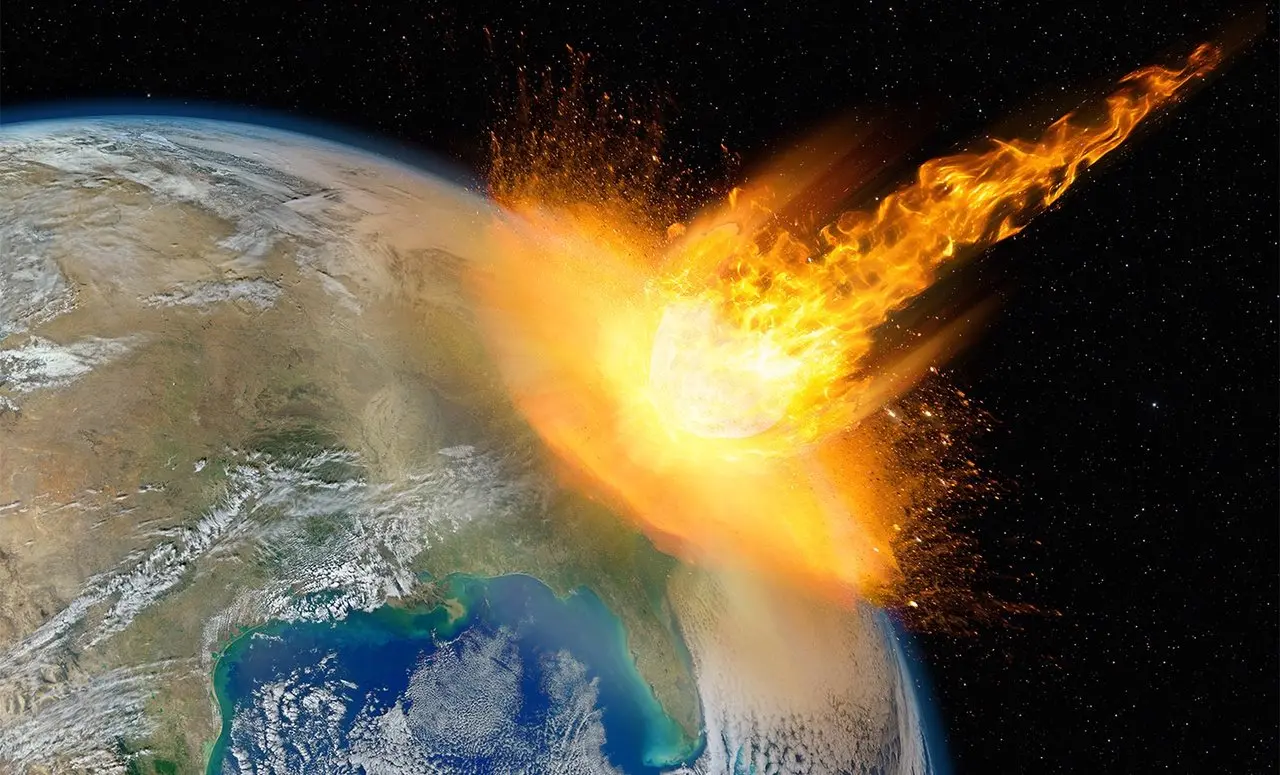
Imagine this: An asteroid hurtling through space—silent, cold, and indifferent—on a collision course with Earth. Its name? Bennu. This rock, about the size of the Empire State Building, could crash into our planet in the year 2182. The odds? Roughly 1 in 2,700. A tiny chance, sure, but what if it did happen? Let’s break it down. Spoiler alert: things would get wild.
A Rocky Visitor from the Cosmos
Bennu isn’t your average space rock. It’s ancient—older than Earth itself—and carries clues about the early solar system. Some of its minerals contain carbon-rich compounds, the raw ingredients of life. This asteroid was so intriguing that NASA sent the OSIRIS-REx mission to scoop up a sample and bring it back for study.

But Bennu’s potential isn’t just scientific gold. It could pack a punch—literally. At about 500 meters across (roughly five football fields end-to-end), it’s big enough to unleash global chaos, even though it’s much smaller than the 10-kilometer asteroid that wiped out the dinosaurs.

The Crash Heard Around the World
Here’s what happens if Bennu decides to drop in for a visit:
- The Impact: A blinding flash of light as Bennu slams into Earth at 40,000 miles per hour, creating a crater miles wide. Dust and rock explode into the atmosphere, forming a dense cloud that wraps around the planet.
- Shockwaves and Tsunamis: If it hits land, powerful shockwaves would flatten cities and trigger massive earthquakes. If it hits the ocean, tsunamis hundreds of feet high would surge across coastlines.
- The Sun Goes Dim: Dust particles would linger in the upper atmosphere for years, blocking sunlight. Think of it like a giant cosmic sunshade, turning day into an eerie twilight.
- A Sudden Chill: Without sunlight, global temperatures could drop by up to 7°F (about 4°C), bringing on a deep freeze that would last for several years. Crops would fail, and rainfall could drop by 15%, drying up rivers and lakes.

A Curious Ocean Surprise
Interestingly, while life on land would suffer, the oceans might have a strange reaction. Dust from the asteroid could be rich in iron—a key nutrient for microscopic plants called phytoplankton. In parts of the ocean where iron is normally scarce, this sudden dust infusion could cause massive algae blooms.
Phytoplankton are the foundation of the ocean food chain, so this algae explosion might temporarily boost marine life, creating a brief window of abundance in an otherwise dire situation. But not all blooms are friendly. Some algae dominate so aggressively that they crowd out other species, causing imbalances in marine life.

Cosmic Catastrophes: Earth’s Been Here Before
This isn’t Earth’s first brush with cosmic chaos. The asteroid that wiped out the dinosaurs 66 million years ago left behind a crater in Mexico’s Yucatán Peninsula—and enough soot and dust to block sunlight for years. And 74,000 years ago, the Toba supervolcano erupted, plunging the world into a volcanic winter that nearly wiped out early human populations.
What’s fascinating is that, despite these catastrophic events, life always finds a way to recover—and humans have proved remarkably resilient. In fact, some scientists believe these challenges helped shape human evolution, making our ancestors more adaptable and resourceful.
Can We Stop an Asteroid?
So, what if Bennu really does head our way? Do we have a plan? Surprisingly, yes! Space agencies are working on technologies that could gently nudge an asteroid off course. The idea isn’t to blow it up—this isn’t a movie—but to give it a little push early enough to change its trajectory.

Bennu’s story isn’t just about doom and disaster—it’s a reminder of how connected we are to the cosmos. Our planet has survived incredible challenges, and we’ve always found a way to adapt. When you think about it, we’re all just spinning on a rock in space, dodging cosmic debris, and somehow, against all odds, thriving.
The study is available here.