

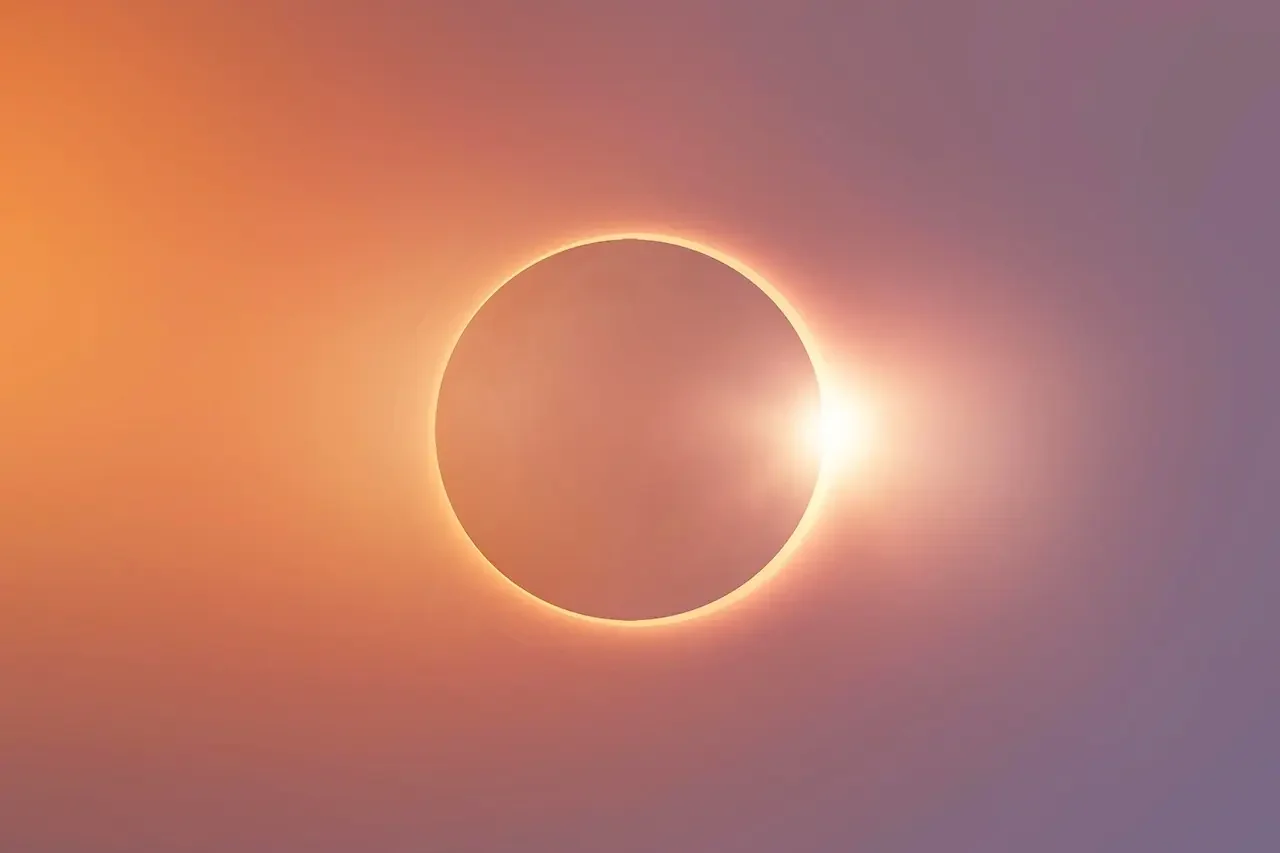
Prepare yourself for one of the most spectacular celestial events of 2024 — the annular solar eclipse, known as the ‘Ring of Fire,’ is on its way! On Oct. 2, 2024, people across the globe will have the opportunity to witness the mesmerizing phenomenon where the moon aligns perfectly with the sun, creating a bright, glowing ring in the sky. This isn’t your everyday solar eclipse — it’s a rare chance to experience a jaw-dropping spectacle that will leave you in awe.
Let’s dive into the key details of this thrilling astronomical event and how you can catch a front-row seat.

What Is the Annular ‘Ring of Fire’ Solar Eclipse?
Unlike a total solar eclipse, where the moon completely covers the sun, an annular eclipse occurs when the moon is slightly farther from Earth. The result? Instead of total darkness, a dazzling ring of sunlight surrounds the moon’s dark silhouette, creating a ‘ring of fire’ that lights up the sky in a breathtaking display.
The Oct. 2, 2024 eclipse will follow this very pattern. As the moon passes between Earth and the sun, its size will appear just a bit smaller than usual, allowing the sun’s outer edges to shine brightly, framing the moon with a glowing ring. It’s a sight that will leave sky-watchers amazed — and it only happens under precise cosmic conditions.
The magic of this eclipse lies in the moon’s antumbral shadow, which allows the ‘Ring of Fire’ to occur. If you happen to be along the eclipse’s path, you’ll get to experience this jaw-dropping event up close. The eclipse path is key, as it dictates where the annular eclipse will be visible.
The Path of the Eclipse: From Pacific to South America
The path of the eclipse will begin over the southern Pacific Ocean, moving eastward and then southeastward. According to the Farmer’s Almanac, it will first pass north of Kiribati, then continue northeast of French Polynesia and Pitcairn Island. But here’s where it gets truly thrilling — the point of greatest eclipse. At this location, the annular phase will last an impressive 7 minutes and 24 seconds — a long stretch for eclipse viewing! With the sun at an altitude of 69 degrees, and the eclipse path spanning 165 miles, it will be an unforgettable sight.

One of the most exciting viewing locations will be Easter Island, where the solar ring will linger for 6 minutes and 5 seconds, allowing skygazers to revel in the celestial wonder. Imagine standing in one of the most remote locations on Earth and witnessing the moon’s silhouette ringed in fire!

As the eclipse continues, about 68 minutes later, the moon’s shadow will make landfall in South America, passing over Chile’s Parque Nacional Laguna San Rafael before moving across Argentina and finally exiting over the Atlantic Ocean. In Argentina, at Cañadón Once de Septiembre, lucky viewers will witness the final stages of the annular eclipse before it leaves Earth, as mentioned by EarthSky.
Where and When to Watch the Eclipse
So, how do you make sure you don’t miss this incredible event? The timings are crucial, as the eclipse won’t be visible everywhere. But even if you’re not on the eclipse’s direct path, many parts of the world will get to see a partial eclipse — still a stunning sight.
Here’s a quick look at the key moments of the eclipse in EDT (Eastern Daylight Time):
Partial eclipse begins: 11:42 a.m.
Annular eclipse begins: 12:53 p.m.
Greatest eclipse: 2:42 p.m.
Annular eclipse ends: 4:36 p.m.
Partial eclipse ends: 5:46 p.m.
For those in South America, a partial eclipse will also be visible in the southern two-thirds of the continent during the afternoon hours. In the morning, regions like Baja California Sur will experience their own version of this solar wonder as the partial eclipse begins to unfold.
To get the best view of the eclipse, be sure to plan ahead and find a location within the 165-mile-wide path. Not only will you see the spectacular annular phase, but you’ll also get to experience a partial eclipse in the surrounding regions. And remember—never look directly at the sun without protective eclipse glasses!

The Science Behind the ‘Ring of Fire’
While the sight of the ‘Ring of Fire’ is enough to leave you spellbound, understanding the science behind it makes the experience even more fascinating. This annular solar eclipse happens because the moon’s orbit around Earth isn’t a perfect circle. Sometimes it’s closer, and sometimes it’s farther away. When it’s farther away during a solar eclipse, it appears smaller in the sky, allowing the edges of the sun to peek through — creating the famed ring of light.
During this event, the moon casts its antumbral shadow, which extends beyond the more well-known umbra. The shadow creates a path on Earth where the ‘Ring of Fire’ is visible. The eclipse’s path from the southern Pacific Ocean, across parts of South America, and finally exiting over the Atlantic, will allow millions to witness the celestial display, as outlined by EarthSky.
For those in areas that will only experience the partial eclipse, the moon will block out part of the sun, dimming the light and casting unusual shadows—still a dramatic sight, even if you’re not directly under the ‘Ring of Fire.’

Don’t Miss This Once-in-a-Lifetime Event!
Whether you’re planning to watch the eclipse in person, catch a livestream online, or simply learn more about it, the October 2, 2024 annular solar eclipse is an event you won’t want to miss. Mark your calendars, grab your eclipse glasses, and prepare to be amazed as the moon and sun align to create a breathtaking ring of fire in the sky. This is your chance to witness a celestial event that happens only once every few years—so don’t let it pass you by!