


Have you ever imagined a world beneath the ocean, where sunlight cannot penetrate and darkness is unimaginably deep? Join us in exploring a wondrous realm within the depths of the ocean - the "Twilight Zone" - where living organisms thrive and adapt in this harsh environment.
In the Twilight Zone, approximately 200 to 1000 meters below the sea surface, it may seem hopeless for any creature to survive. However, unexpectedly, beneath that dark layer of water, there exists a remarkable phenomenon known as "bioluminescence."
In that pitch-black space, marine organisms have developed special mechanisms to emit their own light, creating a vibrant and magical life. They form a unique ecosystem where sparkling blue light and unimaginable biodiversity flourish.
So which creatures have adapted and thrived in this Twilight Zone? Let's explore the diversity of marine organisms such as bioluminescent jellyfish, anglerfish, and flashlight shrimp, creatures capable of generating their own light to search for food and communicate with each other in the dark environment.
With the mysteries and marvels that the Twilight Zone holds, studying the life within it is not just a scientific adventure but also a way to expand knowledge and gain a deeper understanding of life beneath the ocean. Let's step into the colorful darkness of the Twilight Zone and discover the extraordinary creatures that exist within it.
Biological phenomenon at midnight
- What is the biological phenomenon at midnight
The phenomenon of bioluminescence is a special occurrence that takes place beneath the ocean floor in the Twilight Zone. In contrast to the complete darkness of this environment, marine organisms here have developed the ability to generate their own light, creating a radiant and mesmerizing spectacle.
The biological mechanism behind this phenomenon is a process called "bioluminescence." Marine organisms in the Twilight Zone produce and emit light through the interaction of chemicals called "luciferin" and "luciferase" within their bodies.
When luciferin interacts with luciferase and other factors such as oxygen, electrolytes, and pH, a chemical reaction occurs, resulting in the organism emitting light. The color and type of light emitted can vary depending on the species and its intended purpose, ranging from bright blue light to gentle yellow light.
Organisms use bioluminescence in the Twilight Zone for communication, hunting prey, self-defense, attracting mates, and various other biological purposes. For example, some organisms use light to lure prey or create mesmerizing effects and act as a diversion to avoid predation.
The phenomenon of bioluminescence not only creates a visually stunning and enchanting scene in the ocean but also provides valuable data for scientists to understand the development and interactions of organisms in this harsh environment.
Renowned scientist Bruce Robison is diving into the vast expanse of deep-sea waters, a region known as the "Twilight Zone." This is a unique area within the ocean located approximately 200 to 1000 meters below the sea surface.
On the water's surface, the Twilight Zone appears relatively dark, with minimal sunlight penetrating through. However, beneath the ocean floor, there is a phenomenon known as "biological bioluminescence." This is a process where marine organisms beneath the ocean floor utilize special biological mechanisms to produce their own light. It creates a unique ecosystem with the presence of light-emitting organisms and establishes a distinctive style of life in the dark environment.
Bruce Robison and his team have been studying this water zone to understand the biodiversity and ecosystem present here. They can utilize specialized devices and technologies such as underwater robots and red-light systems to observe and collect data on the organisms and their habitats.
Research on the Twilight Zone helps us gain further insights into the development and survival of organisms in this harsh environment. This can provide valuable information on biological adaptations, ecological interactions, and warnings about environmental changes affecting deep-sea ecosystems.

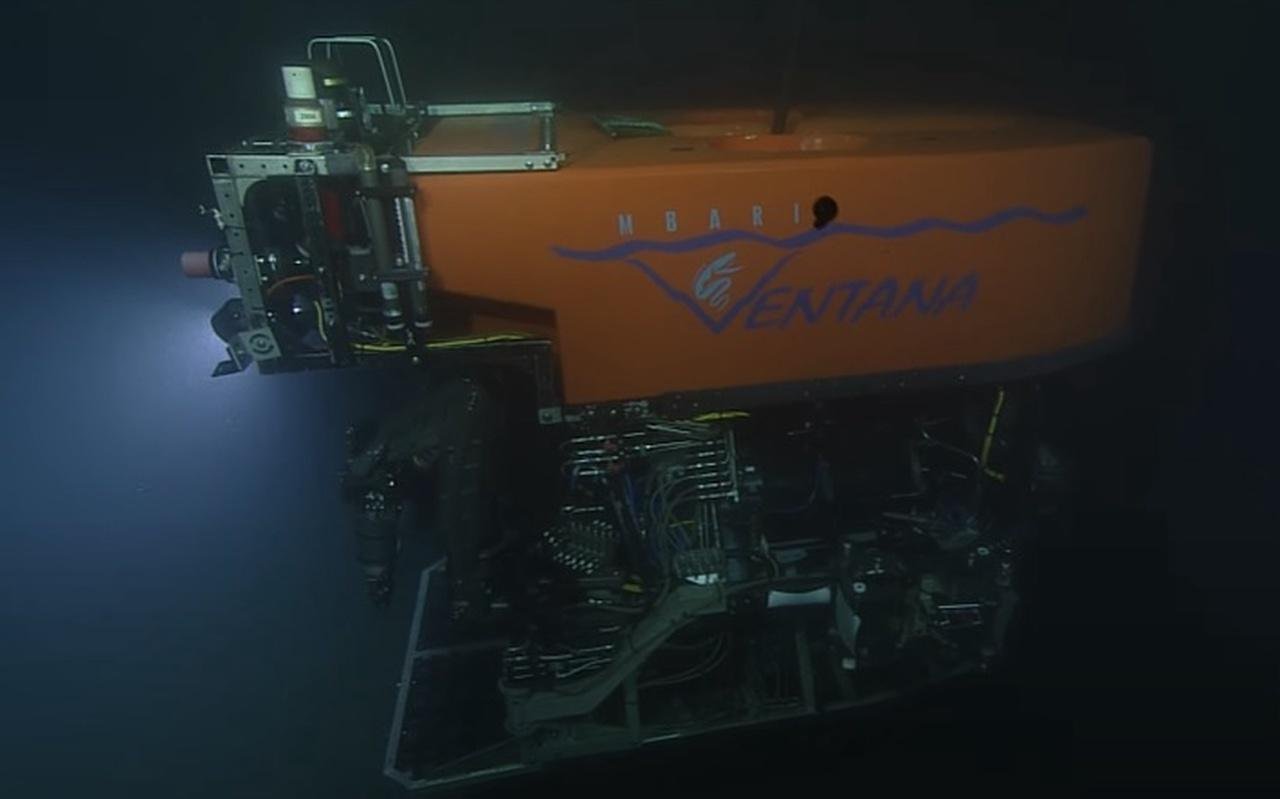
Bruce Robison has indeed utilized advanced technologies such as remotely operated vehicles (ROVs), autonomous underwater vehicles (AUVs), and professional filming systems to explore and document the marine life at the ocean floor.(Screenshots)
- The process of bioluminescence production in organisms in the "Twilight Zone”.
The process of light production in organisms in the Twilight Zone is closely related to the phenomenon of bioluminescence. Here is an overview of how organisms in the Twilight Zone generate their own light:
Luciferin: This is a chemical compound present in organisms' bodies and is responsible for producing light. Luciferin does not naturally emit light on its own, but it has the ability to luminesce when interacting with a specific enzyme.
Luciferase: This is the enzyme that activates luciferin, causing it to emit light. Luciferase plays a crucial role in the bioluminescence process. When luciferase interacts with luciferin and other factors such as oxygen, electrolytes, and pH, it triggers a chemical reaction that results in light production.
Other factors: In addition to luciferin and luciferase, other factors are necessary for the light production process to occur. These factors include oxygen, which can be derived from oxygen or free oxygen compounds, as well as suitable electrolytes and pH levels. These factors provide ideal conditions for the bioluminescent process.
By combining the interactions of luciferin, luciferase, and other factors, the process of light production takes place within the organisms' bodies in the Twilight Zone. When the surrounding environment meets the required conditions, organisms activate the bioluminescent mechanism, and light is emitted from specific areas of their bodies.
This process creates a magical glow, establishing a unique living environment and providing specialized biological mechanisms for organisms in the Twilight Zone to interact with their environment and the different species around them.
The organisms living in the "Twilight Zone"
Following in the footsteps of Senior Scientist Bruce Robison, diving into the vast depths of the ocean has opened a new gateway for understanding and exploring the Twilight Zone.
During his expeditions, Robison utilized advanced technologies such as remotely operated submarines, autonomous diving devices, and professional filming systems to explore and document life on the seafloor. The collected images and videos have provided a wealth of valuable information about the organisms, environment, and biological processes in the Twilight Zone.
The organisms inhabiting the Twilight Zone exhibit remarkable diversity and have adapted to the dark and high-pressure environment. Through his expeditions, scientist Bruce Robison has documented the presence of several species in the "Twilight Zone" of the deep sea. Here are some of the observed species:
1. Jellyfish
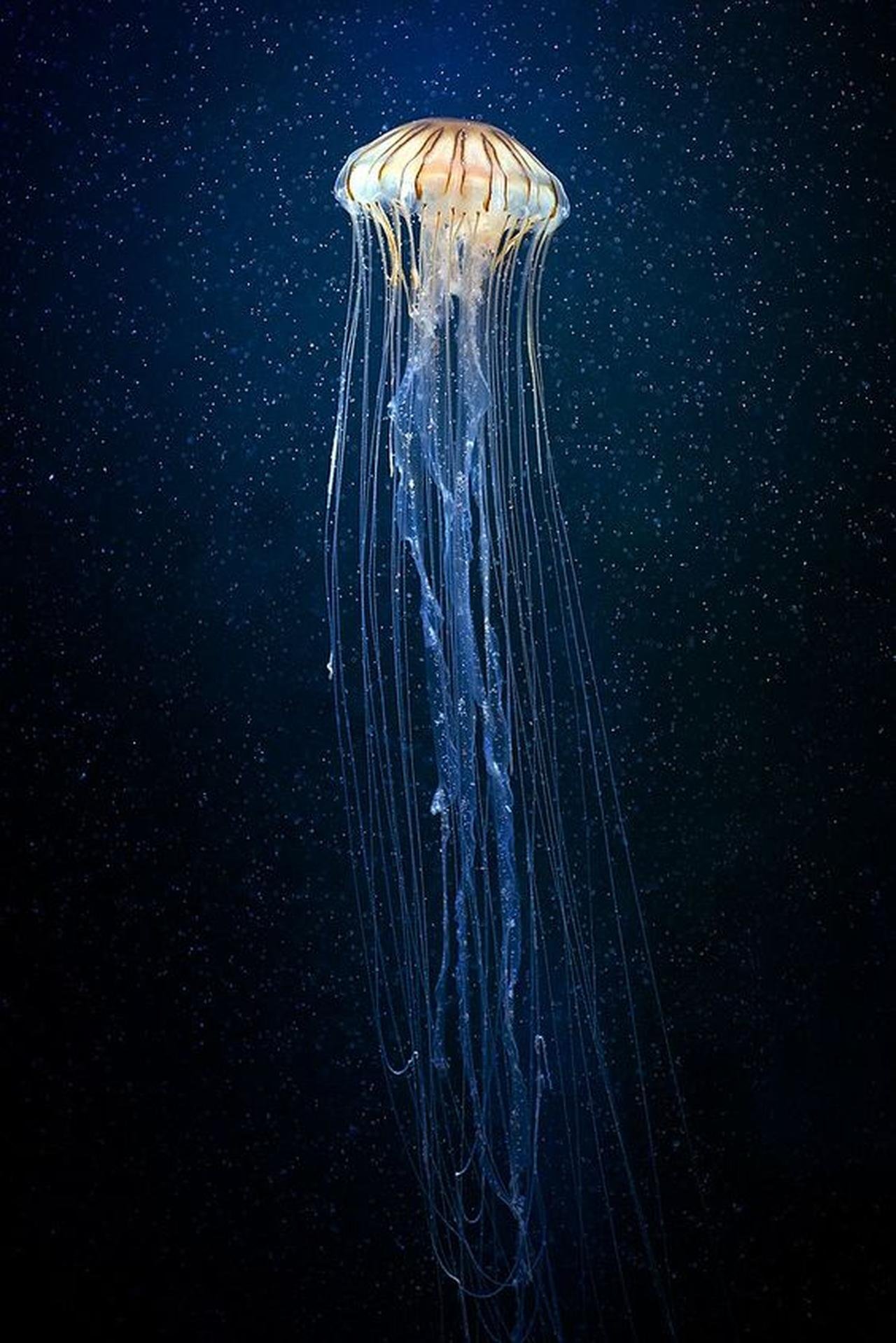
Some jellyfish species in the Twilight Zone have the ability to bioluminesce, producing light in the dark environment. They utilize biological mechanisms to generate light from specialized light-emitting organs on their bodies, attracting prey and interacting with the surrounding environment
2. Black seadevil anglerfish

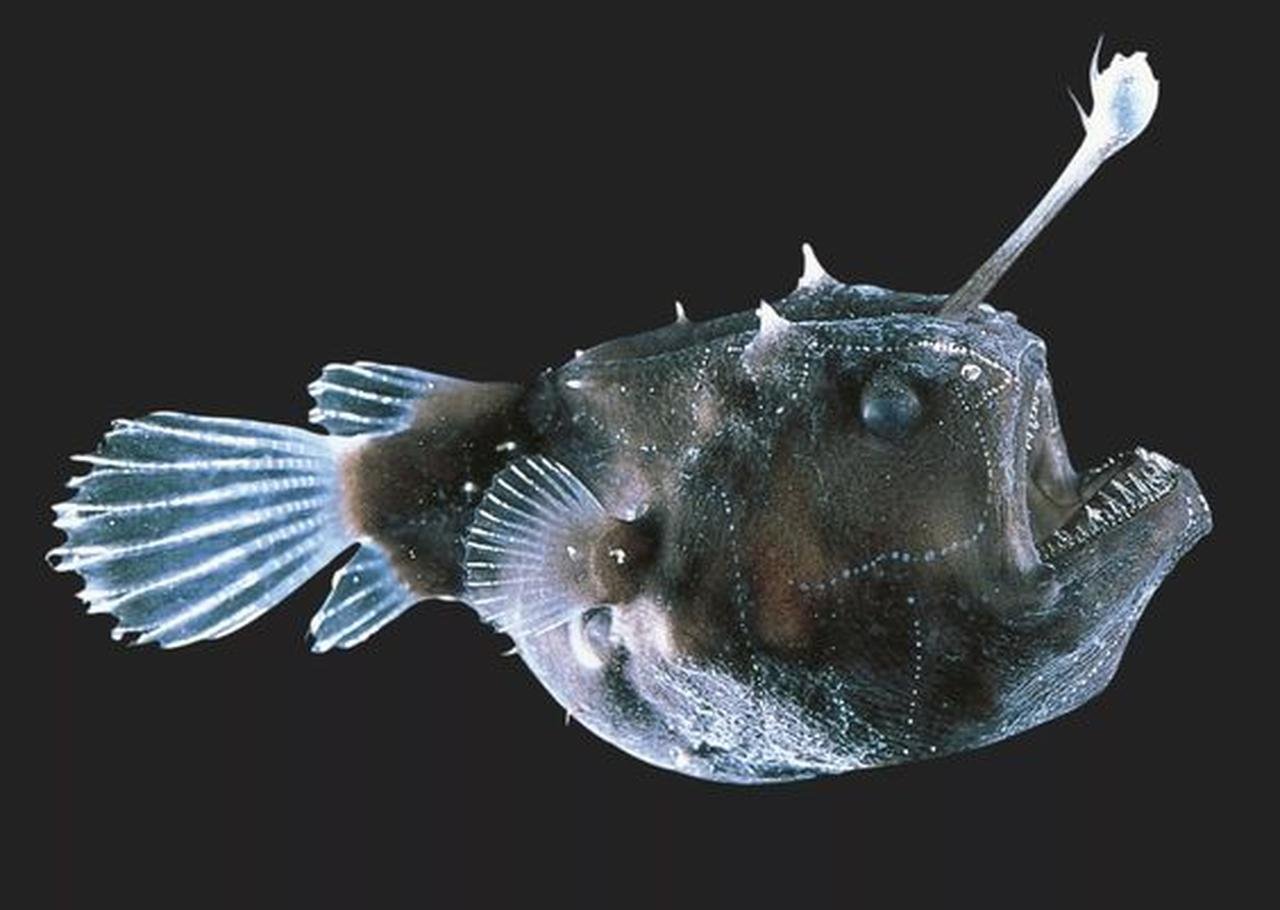
The Black Seadevil anglerfish, also known as Melanocetus johnsonii, is a deep-sea fish belonging to the family Ceratiidae. It is a distinct and remarkable species, often found in deep and dark oceanic regions.
The black seadevil anglerfish has a stout, black body without scales. Its most notable feature is its large and wide mouth, equipped with a row of sharp teeth. It uses this mouth to engulf its prey completely. On its head, there is a light-emitting organ called the "esca" or "illicium," which has the ability to produce light and attract prey closer.
Black Seadevil anglerfish inhabit deep-sea environments, typically ranging from hundreds to thousands of meters below the water surface. They are adapted to the dark environment and can survive under extremely high pressure. These fish are rare, and information about them is limited due to the challenges of studying and observing them in the deep-sea floor environment.
3. Shrimp glowing (Shrimp)
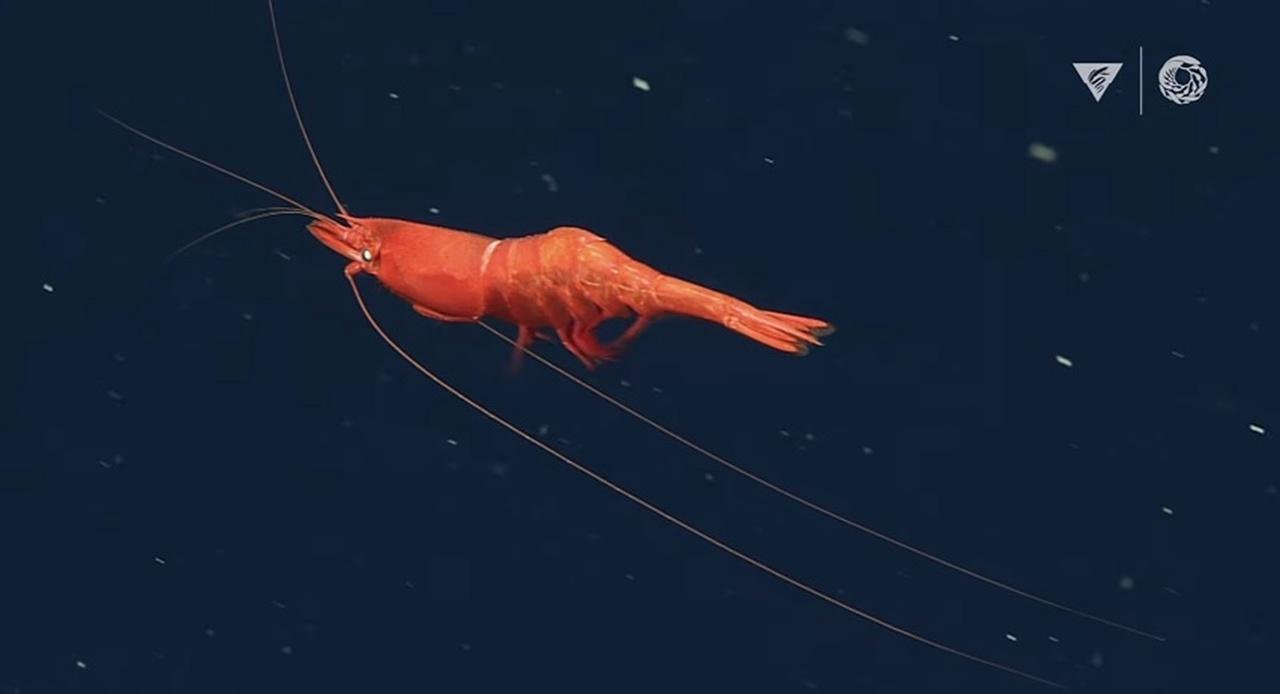
Some species of shrimp in the Midnight Zone have the ability to produce light from their pincers. They use this light to attract prey or to communicate with other individuals.
4.Tree jellyfish (Siphonophores)
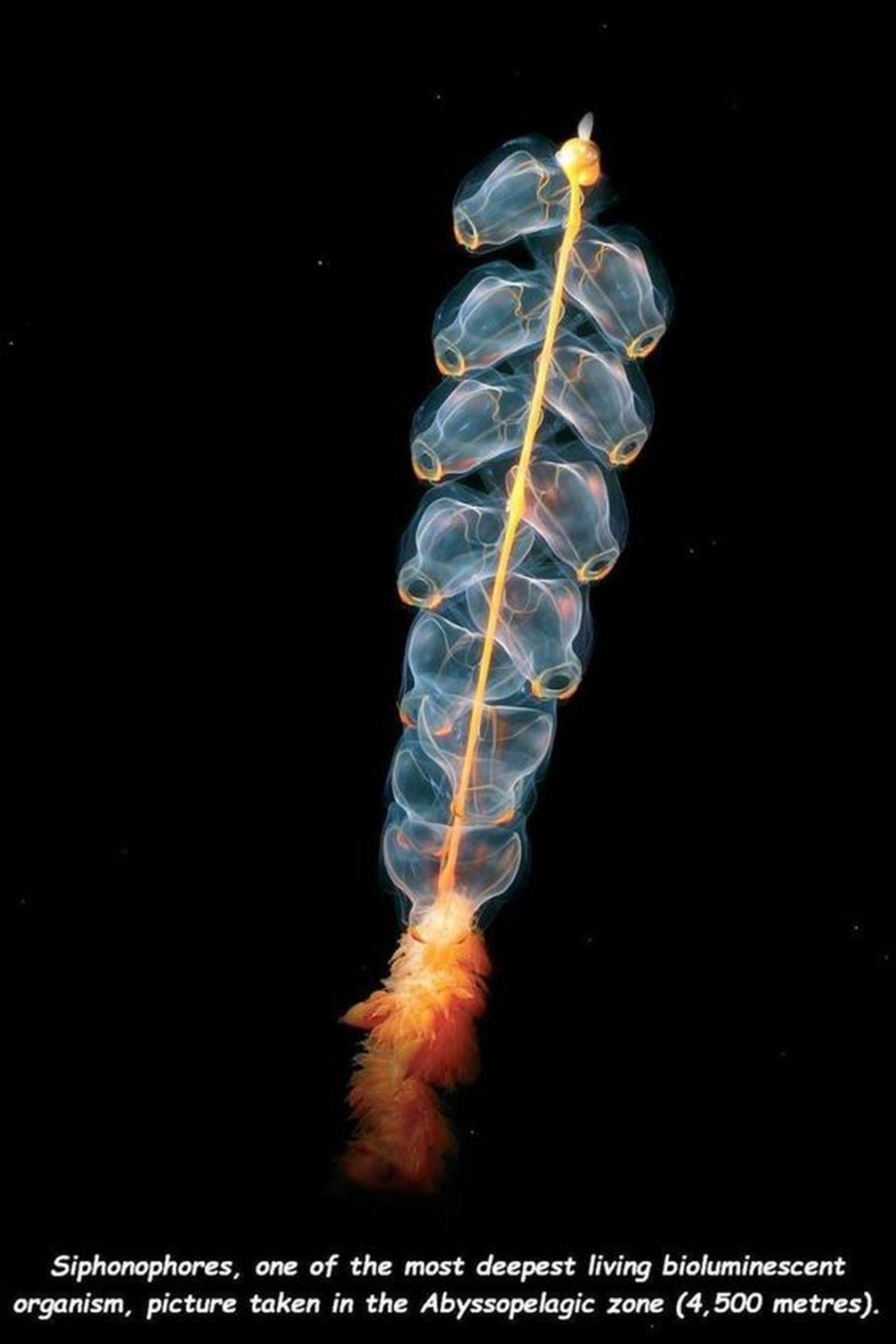
Tree jellyfish are another type of jellyfish found in the Midnight Zone. They have a tree-like shape and have luminescent organs distributed on their bodies, creating a unique light in the dark environment.
5. Owlfish Pseudobathylagus milleri

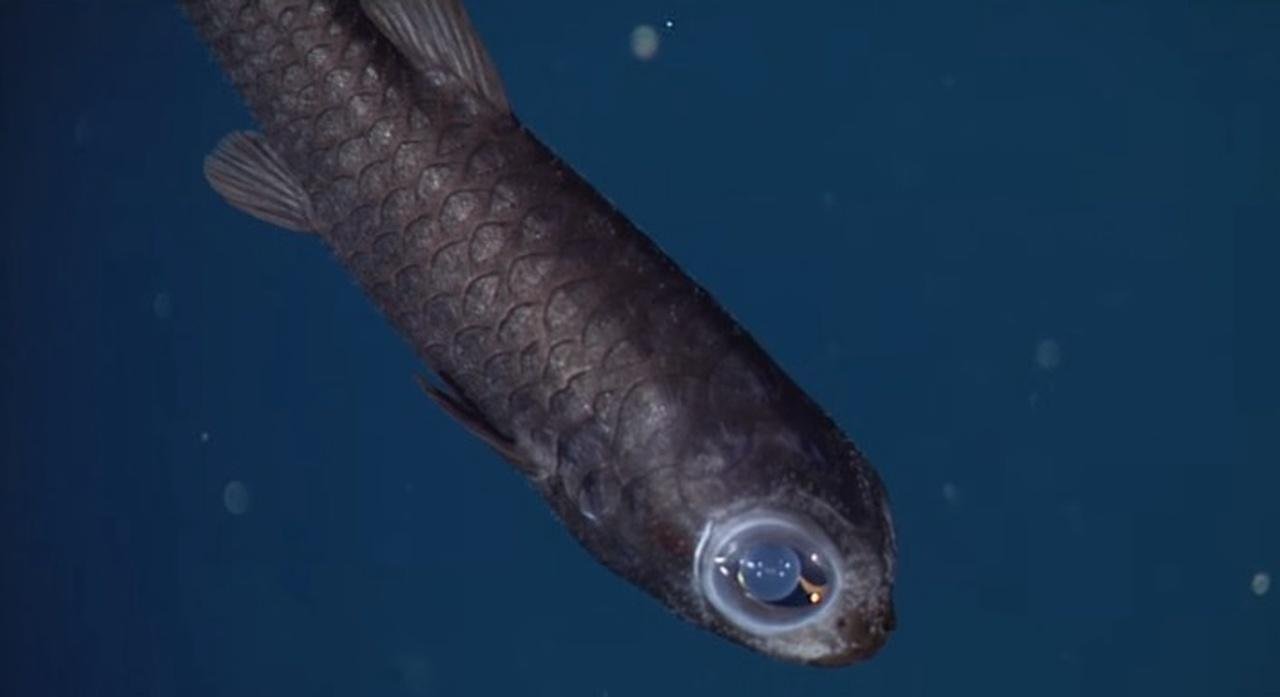
Owlfish, scientifically known as Pseudobathylagus milleri, is a deep-sea fish belonging to the Ophidiidae family. This fish species is commonly found in deep and dark oceanic regions, particularly in the Midnight Zone. Owlfish, Pseudobathylagus milleri, has a laterally compressed body and an elongated shape. It possesses a pair of large and luminescent eyes that resemble the eyes of an owl, hence the name "owlfish." This fish is part of the benthic community and is adapted to the high-pressure and low-light environments of the deep sea.
6. Whalefish Cetomimidae

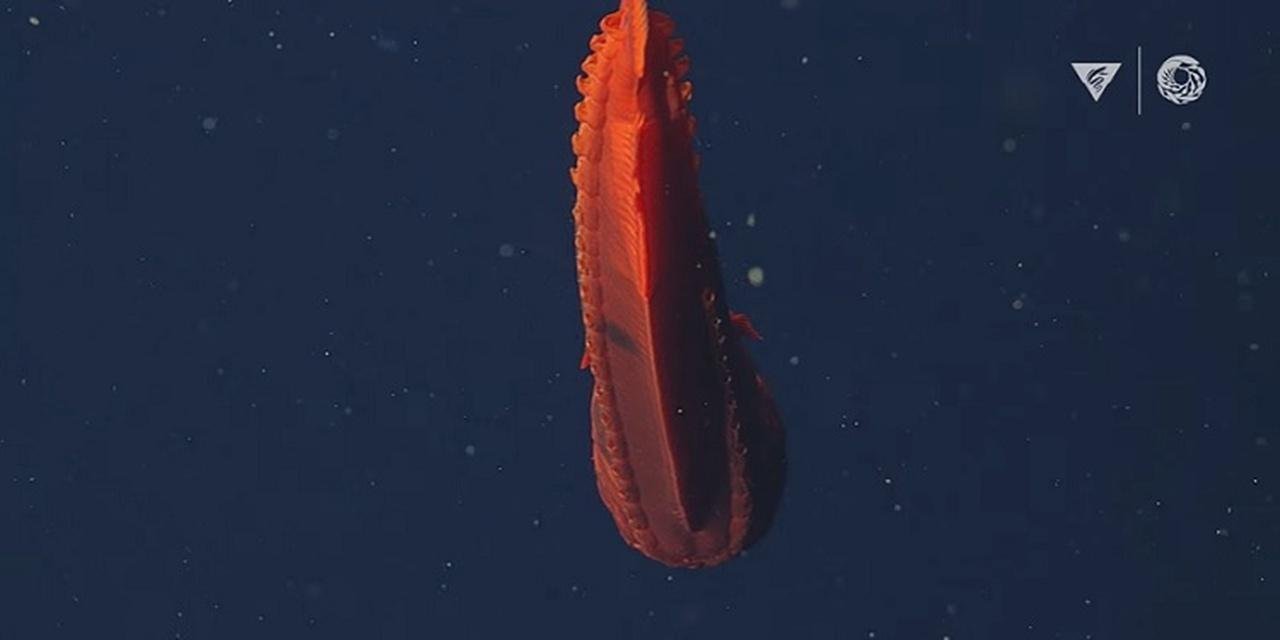
Whalefish, also known as the Mirapinnidae family, is well adapted to high-pressure and low-light environments. They typically possess large eyes and lack prominent dorsal, anal, and pectoral fins. Some species of whalefish have the ability to bioluminesce, producing light from luminescent organs on their bodies to attract prey or communicate with other individuals in a dark environment.
7. Black swallower (Chiasmodon niger)

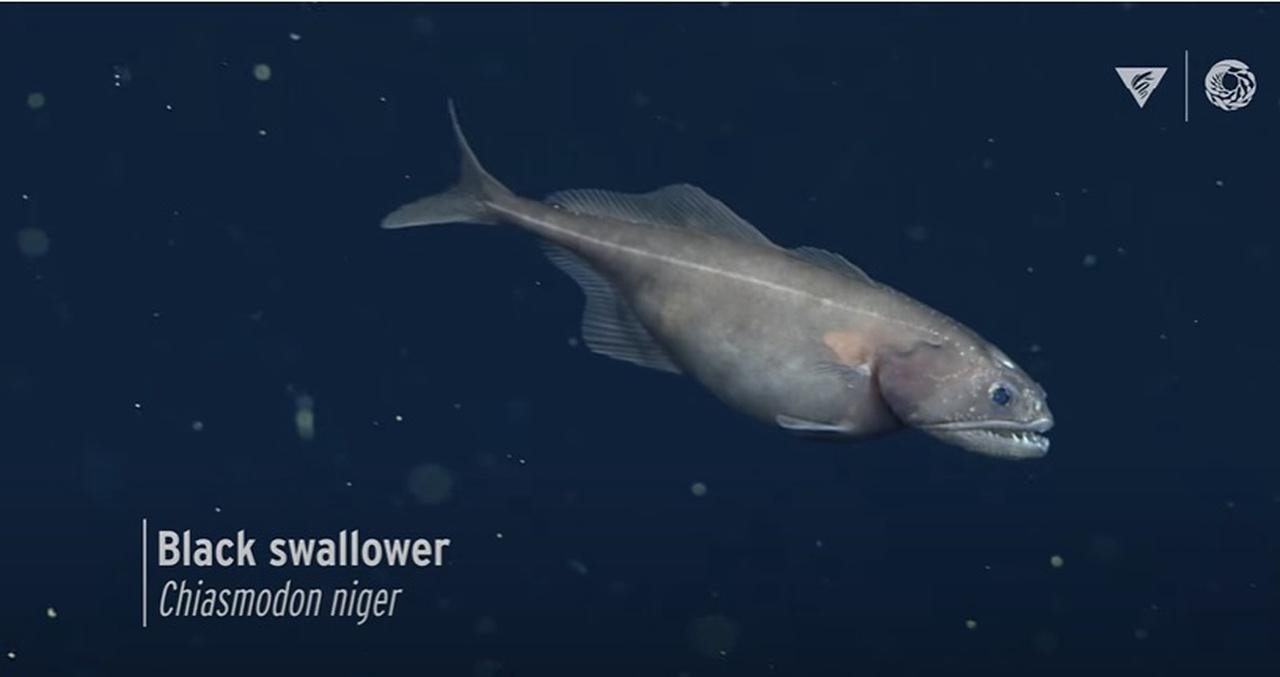
The black swallower (Chiasmodon niger) is a deep-sea fish belonging to the Chiasmodontidae family. It is a small-sized fish found primarily in deep and dark waters.
The Black swallower is renowned for its ability to consume fish larger than itself. Its notable feature is its expandable stomach and distensible esophagus, which allows it to swallow prey larger than its own size. Undigested food can account for up to 10 times the weight of the black swallower.
Black swallowers typically inhabit deep-sea environments ranging from 700 to 2,400 meters. Their adaptation to high-pressure and low-light environments is considered one of their unique characteristics.
8. Whipnose anglerfish
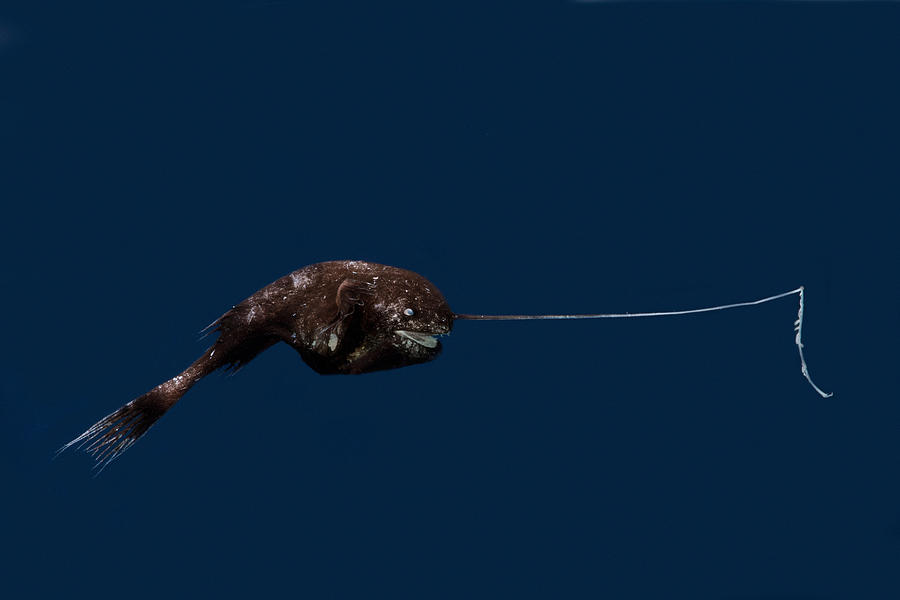
The whipnose anglerfish, also knas then as whipnose seadevil, is a marine fish belonging to the Antennariidae family. They are called whipnose due to their long, cursnout,nwhich resemblesling a whip. This fish species has distinctive shapes and colors that help them blend perfectly into the seafloor environment. Whipnose anglerfish have a stout and laterally compressed body. They can change their coloration and patterns on their body to match their surrounding environment. A notable characteristic of this species is its long, curved snout, which is used as a lure to attract prey. The whipnose anglerfish's snout is highly mobile and serves as an effective hunting tool.
Whipnose anglerfish typically inhabit deep and dark oceanic regions, where they form an important part of the benthic community. They are adapted to high-pressure and low-light environments and are often found on seafloor structures such as rocks or coral reefs.
The Importance of Studying the "Twilight Zone"
The organisms inhabiting the 'Twilight Zone' of the deep sea represent a unique and fascinating ecosystem. This is a dark, high-pressure environment with limited light, where only specialized organisms can survive and thrive.
Within the 'Twilight Zone,' we find bioluminescent creatures such as glowing jellyfish, lanternfish, shrimp, and comb jellies. These organisms have developed unique biological mechanisms to produce light and use it to attract prey or communicate with other individuals. Fish species like whalefish, black swallowers, and anglerfish also reside in this zone, with notable biological adaptations such as deep-sea swallowing or possessing a specialized lure system.
Research on organisms in the 'Twilight Zone' holds significant importance. It helps us gain a deeper understanding of the biodiversity, structure, and habitat of the deep sea. Scientists and researchers have conducted explorations, made new discoveries, and gathered information about rare species and their unique biological mechanisms. These studies provide the necessary knowledge to better protect and manage the deep-sea environment, while contributing to a greater understanding of the life and potential of the deep sea.