


To avoid rising utility rates and grid failures, global homeowners seek energy independence. Solar energy is the cleanest, but capturing sunlight is just the start. Solar panel direct current cannot power household appliances. We need a good solar power inverter to turn sunlight into safe, usable household electricity. A household's energy management, safety, and power backup during seasonal storms depend on its equipment.
Consider system capacity and scalability when leaving utilities. Smoothly handling heavy appliance surges, multiple battery banks, and secondary backup sources. Buying a reliable system eliminates power interruptions from cheap components. The microgrid is fully controlled by homeowners, ensuring uninterrupted electricity regardless of infrastructure.
Solar Power Inverter Selection for High Performance
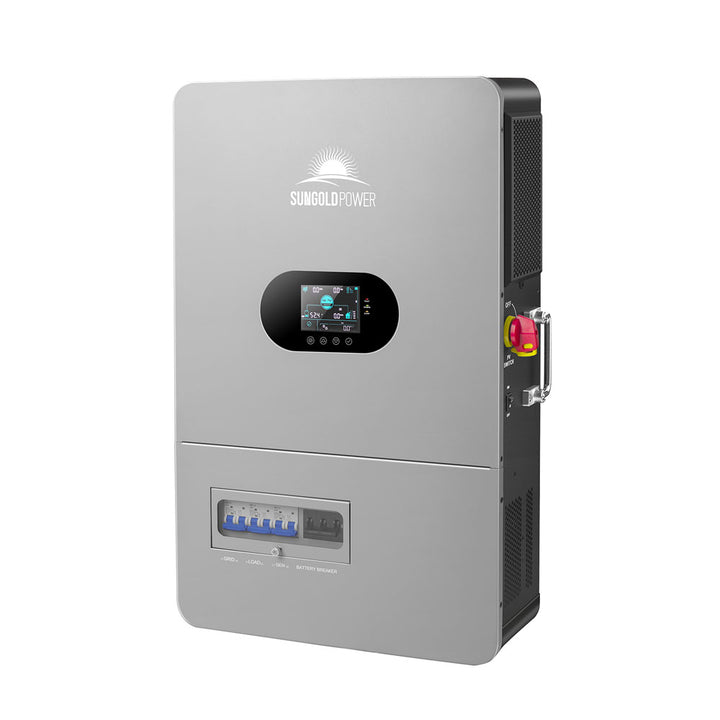
Each residential solar installation needs a central power converter to maintain alternating current. Standard systems handle small appliances, but heavy-duty households need more. The SunGoldPower 12KW 48V Split Phase Solar Inverter FRE12K-B provides 12,000 Watts of continuous output power. Our design addresses the intense electrical startup surges that trip smaller systems on hot summer afternoons.
Modern homes' diverse electrical configurations require flexible central system voltage management. It supports 120 Volt single-phase distribution and 120 Volt / 240 Volt split-phase inputs. You can run sensitive home office electronics and massive workshop equipment without voltage transformers. This structural flexibility saves installation space, simplifies wiring, and ensures every room has a clean, regulated electrical frequency under different load conditions.
Power Scaling for Large Residential Use
Modern property owners must expand systems as energy needs change. A single unit can power a typical household, but growing families or home businesses need more. This architecture allows six-unit parallelism. Homeowners can scale their system to 72,000 watts of continuous power.
Sequential system expansion prevents overbuying equipment, which limits residential projects. Homeowners can install what they need and increase capacity when they buy an electric car or build a guest house. Human-free interconnected units balance property load distributions instantly. Collective management lowers component wear, operating temperatures, and residential electrical system lifespan.
Dual Mppt Maximises Solar Harvesting
The best solar panel control system adapts to sunlight angles, cloud cover, and seasonal changes. Two independent 22 Ampere tracker channels use advanced Maximum Power Point Tracking. These dual inputs efficiently manage 13,200 Watts of solar PV array input. East and west roofs can have solar panels without affecting efficiency.
The solar array's two tracking zones ensure consistent energy production from sunrise to sunset. While one roof zone receives afternoon sunlight, the secondary tracker optimises ambient light on the other side. This constant technical optimisation fills battery storage banks faster and powers high-consumption household items during peak daylight hours.
Off-Grid PV Inverter Smart Design
True energy freedom means keeping the house running during multiple days of heavy rain or winter snow that reduce solar generation. This flexible off-gridPVv inverter for weather challenges supports pure solar-only and integrated hybrid charging. Your preferences determine when the internal control system prioritises clean solar energy and when to use other inputs.
The hybrid logic intelligently manages battery health and powers essential household circuits. The system automatically draws power from battery banks or other inputs during low solar production to avoid blackouts. This automatic shifting eliminates manual breaker switching, creating a utility grid-like electricity flow.
Manage Critical Electrical Loads with Independent Ports
Standard residential layouts suffer when a single heavy appliance overloads the main electrical line and darkens the house. This system's clever dual-purpose generator port solves that structural issue. This hardware interface can be programmed as a secondary load output zone for smart residential management.
A dual-zone wiring architecture lets homeowners separate essential appliances from luxury loads. Medical equipment, water well pumps, and refrigeration units connect directly to the primary output stream for priority protection. The secondary line powers pool heaters and electric vehicle chargers, which the system can disable if battery reserves drop below a certain level.
Fast Shutdown Increases Home Safety
Industrial-grade safety protocols are needed for high-voltage solar energy installations to protect families and emergency personnel. This platform has residential safety Photovoltaic Rapid Shutdown circuitry. This safety mechanism reduces system voltage to safe levels in milliseconds during an electrical emergency.
The rapid shutdown feature isolates high-voltage direct current lines at the solar array interface in case of an unexpected physical event. This rapid de-energisation avoids shock for roof rescue workers. Advanced protective engineering meets local building safety codes and gives families peace of mind.
Best Inverter for Long-Term Home Success
Choosing the best inverter for home ensures decades of energy independence and security. This multilayered power management hub simplifies and reduces hardware failure by replacing several standalone components. All-in-one power conversion centres save homeowners from assembling mismatched parts from different manufacturers.
High continuous power wattage, dual tracking efficiency, smart load management ports, and safety systems make this platform a good long-term investment. Using clean energy protects your family from utility market shifts and ageing grid infrastructure. With advanced conversion technology in your residential microgrid, you can live sustainably with uninterrupted power.