


Data analytics has become one of the most accessible and high-growth career options in today’s job market. As organizations increasingly rely on data to make decisions, the demand for Data Analytics Online Course professionals who can interpret and communicate insights continues to rise. This has created a strong pathway for individuals from non-IT backgrounds to shift into analytics roles without needing a traditional computer science foundation.
Why Data Analytics Is a Practical Career Shift
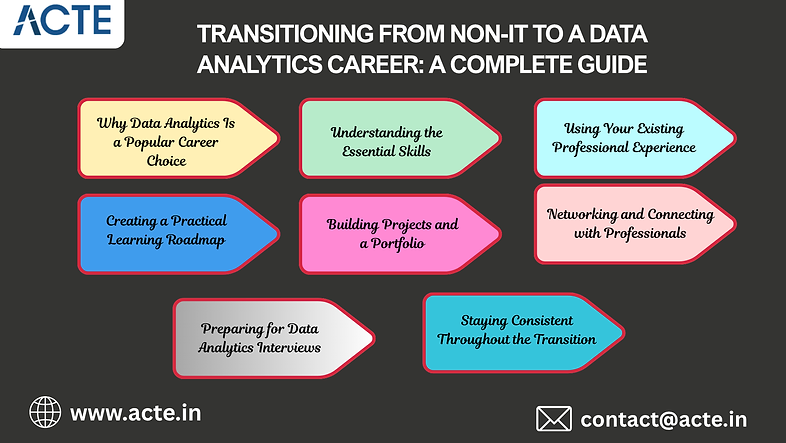
One of the biggest advantages of data analytics is that it is skill-based rather than degree-restricted. Companies across industries such as healthcare, banking, retail, education, and logistics depend on data to improve performance and solve problems. This widespread need means professionals from any background can enter the field, provided they are willing to learn the required tools and techniques.
What a Data Analyst Actually Does
A data analyst works with structured and unstructured data to extract meaningful insights. Their responsibilities include collecting data, cleaning and organizing it, identifying trends, and presenting findings through reports or dashboards. The role is focused on problem-solving and communication, helping businesses understand patterns and make informed decisions based on evidence rather than assumptions.
Key Skills You Need to Build
To start a career in data analytics, you need to develop a few essential technical skills. Excel is widely used for basic analysis and data organization. SQL helps in retrieving and managing data from databases. Visualization tools like Power BI and Tableau allow you to present insights in a clear and interactive format. As you progress, Python becomes valuable for deeper analysis, automation, and handling large datasets.
A Simple and Effective Learning Path
Learning data analytics becomes easier when you follow a structured approach. Start with fundamentals, practice regularly, and gradually move toward advanced topics. Avoid trying to learn everything at once, as consistency and repetition are more important than speed. Small, focused learning steps build strong long-term understanding.
Using Your Background as an Advantage
Your previous work experience can significantly support your transition. Every profession involves data in some form, whether it relates to customers, performance, operations, or finances. This Data Analytics Course in Chennai industry knowledge helps you understand context, ask better questions, and turn raw data into meaningful business insights that decision-makers can act on.
Gaining Practical Experience Early
Real learning happens when you apply concepts to actual datasets. Working on practice projects helps you understand how analytics works in real scenarios. You can analyze sales trends, customer behavior, or operational performance using publicly available data. These Software Training Institute exercises help you build confidence and prepare for real job responsibilities.
Building a Strong Portfolio
A portfolio is one of the most important assets for anyone switching to data analytics. It showcases your ability to solve problems using data. Include projects that highlight different skills such as cleaning datasets, building dashboards, analyzing trends, and presenting insights. A clear explanation of your approach adds more value than just visuals.
The Role of Networking in Career Growth
Connecting with professionals in the analytics field can accelerate your transition. Engaging in online communities, attending webinars, and participating in discussions helps you stay updated with industry trends. Networking can also lead to mentorship, referrals, and opportunities that are not always available through traditional job applications.
Staying Updated in an Evolving Field
Data analytics continues to evolve with new tools, platforms, and techniques emerging regularly. Professionals who keep learning and adapting remain competitive in the job market. Continuous skill development is essential for moving into advanced roles and maintaining long-term career growth.
Conclusion
Transitioning from a non-IT background to a data analytics career is a realistic and achievable journey. By learning the right tools, using your existing domain knowledge, building hands-on projects, and staying consistent in your efforts, you can successfully enter this growing field. With dedication and a structured learning path, data analytics can become a stable and rewarding long-term career choice.