


If you’ve recently installed solar panels or are planning to, you’ve probably realized that generating power during the day is only half the battle. The real magic happens when you can store that energy for evening hours, cloudy days, or unexpected grid outages. That’s where a high capacity 16kWh battery enters the picture. Unlike smaller batteries that might just cover your lights and phone charging, a 16kWh system gives you the freedom to run dishwashers, laundry machines, and even power tools without watching every watt. Think of it as having a full gas tank for your home’s electrical needs. For the average household that isn’t running central air conditioning all night, this size strikes a wonderful balance between cost and capability, making solar truly usable around the clock.
Why 16kWh Fits the Average Modern Home
Let’s get real about numbers for a moment. A typical American home uses about 30kWh per day, but that includes everything from morning coffee makers to late-night TV binges. When you pair solar with a 16kWh battery, you’re not trying to replace the grid entirely—you’re optimizing your self-consumption. What does that mean in plain English? During daylight hours, your solar panels might generate 5kW per hour. Your home uses 1kW, so 4kW flows into the battery. By the time the sun sets, that 16kWh battery might hold enough to run your refrigerator, fans, modem, router, and a few LED lights for twelve solid hours. For a family of four who cooks dinner at home and watches movies in the evening, 16kWh often covers the entire post-sunset period without touching the grid. That translates to noticeable savings on your electricity bill, especially if your utility has time-of-use rates that spike in the evening.
Lithium vs. Lead Acid: A Clear Winner Emerges
Old-school homeowners sometimes remember the days of heavy, smelly lead-acid batteries sitting in ventilated sheds. Those required monthly water top-offs and lasted maybe five years if you babied them. For a 16kWh system using lead-acid, you’d be looking at over a thousand pounds of batteries and a dedicated room just for ventilation. Thankfully, lithium technology has evolved into something far more home-friendly. Modern lithium iron phosphate batteries for 16kWh setups weigh around 250 to 300 pounds total—still heavy, but manageable in a single refrigerator-sized cabinet. They require zero maintenance, no watering, no equalization charges, and they can be safely installed in garages or utility rooms without special ventilation. More importantly, a quality lithium 16kWh battery will give you 6,000 to 10,000 charge cycles, while lead acid taps out around 1,500 cycles. Over fifteen years, lithium actually becomes cheaper per cycle despite the higher upfront price.
Modular Designs Let You Start Smaller
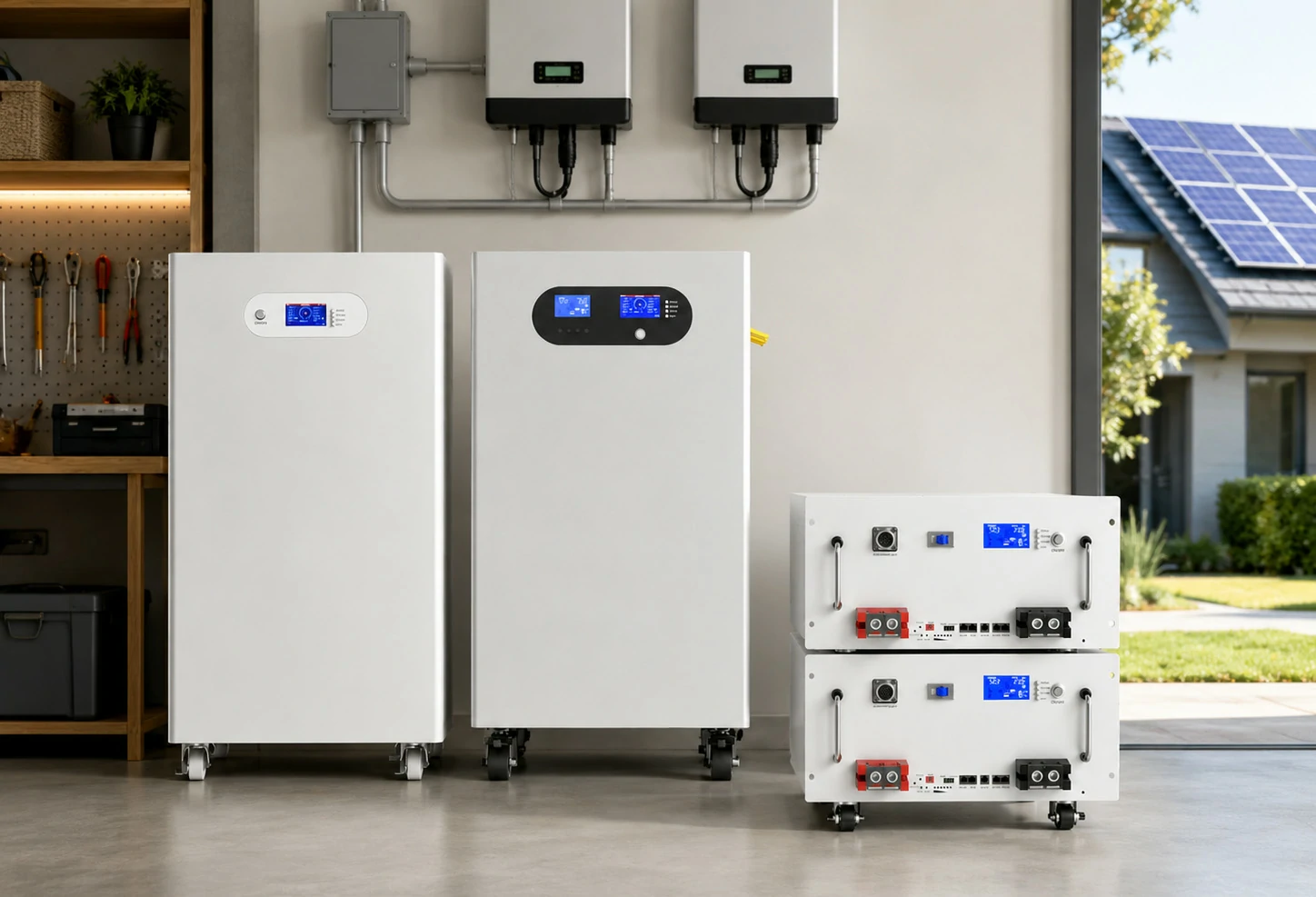
One of the best trends in solar storage is modularity. You don’t have to buy the full 16kWh all at once if your budget is tight. Many manufacturers offer battery cabinets that accept individual modules, each adding roughly 2 to 5kWh. For example, you might start with two modules giving you 10kWh, then add a third module six months later to reach 15kWh, and finally a fourth module to hit 16kWh or slightly above. This approach is incredibly forgiving for homeowners who are still learning their energy habits. Maybe you realize that your actual evening usage is only 12kWh, so you stop there and save your money. Brands like Fortress Power, Discover Battery, and SimpliPHI have embraced this modular philosophy with stackable units that snap together physically and communicate automatically. The only catch is making sure your inverter supports the same modular expansion—most hybrid inverters from Sol-Ark, Schneider, or Outback do.
Depth of Discharge Matters More Than You Think
When you see a 16kWh battery advertised, that number usually refers to its total capacity. But here’s the secret that salespeople sometimes gloss over: you can’t use every last watt without damaging the battery. Depth of discharge (DoD) is the percentage you can safely use. Older lead-acid batteries only allowed 50% DoD, meaning a 16kWh lead-acid battery actually gave you only 8 usable kWh. That’s a huge difference. Modern lithium batteries, especially LiFePO4 chemistry, offer 80% to 95% DoD. At 95%, your 16kWh lithium battery gives you 15.2 usable kWh—nearly the full rating. Some premium brands even advertise 100% DoD, though staying at 80% to 90% dramatically extends battery life. When comparing prices, always calculate cost per usable kWh. A cheap battery with low DoD might actually be more expensive in real-world terms than a pricier lithium battery that lets you use almost everything you paid for.
Pairing With Your Existing Solar Inverter
You might be surprised to learn that not every 16kWh battery works with every solar system. The key compatibility point is voltage—most home solar batteries operate at 48 volts DC. Your solar panels connect to a charge controller or hybrid inverter that must speak the same language as your battery’s battery management system (BMS). This communication is crucial because the BMS constantly monitors cell health, temperature, and charge levels, and it needs to tell the inverter when to stop charging or discharging. Closed-loop communication, where the battery and inverter talk directly via CAN bus or RS485, is the gold standard. Open-loop systems, where the inverter guesses based on voltage alone, work but aren’t as precise. Before buying any 16kWh battery, check the manufacturer’s compatibility list. Popular inverters like Victron, Growatt, and Sungrow have extensive lists of tested batteries. If your inverter isn’t on the list, you risk erratic behavior or even voiding warranties.
Realistic Return on Investment
Let’s talk dollars and sense. A complete 16kWh lithium battery system plus installation typically costs between 7,000and7,000and12,000, depending on brand and complexity. That sounds like a lot, but consider this: if your utility charges 0.25perkWhduringpeakeveninghoursandyoushift12kWhperdayfromgridtobattery,yousave0.25perkWhduringpeakeveninghoursandyoushift12kWhperdayfromgridtobattery,yousave3 daily. Multiply by 365 days, and that’s 1,095peryear.Overtenyears,that’snearly1,095peryear.Overtenyears,that’snearly11,000 in avoided electricity costs. Add in federal tax credits—currently 30% in the U.S. for energy storage paired with solar—and your upfront cost drops significantly. Many homeowners also qualify for state or local rebates, some of which cover up to half the battery cost. The break-even point for a 16kWh system often lands between five and seven years. After that, the battery is essentially paying you back year after year. Plus, you get the intangible benefit of lights staying on when your neighbor’s go dark. That’s a return that never shows up on a spreadsheet but feels awfully good during hurricane season or winter ice storms.