


Closed-cell spray foam usually stays effective for the entire life of your home or commercial building. Most industry data suggests that the Closed Cell Spray Foam Lifespan can exceed 80 to 100 years without needing replacement. This material is designed to stay in place and maintain its physical properties as long as the building structure remains intact.
This guide provides a detailed look at how this material holds up in the specific climate of Wisconsin. You will learn about the factors that influence its performance and why it is often considered a permanent solution for property owners. Experienced professionals understand that choosing the right material depends on long-term expectations for energy savings and comfort.
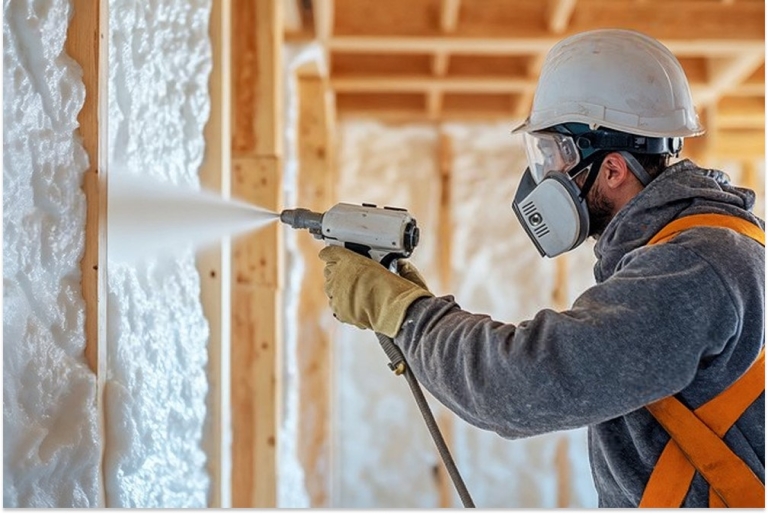
Standard Closed Cell Spray Foam Lifespan Expectations
The closed cell spray foam insulation in Plover WI lifespan is much longer than traditional options like fiberglass or cellulose. While those materials might settle or sag after 15 or 20 years, closed-cell foam remains rigid. It adheres directly to the wall studs and roof sheathing, which prevents it from moving or losing its shape over time.
In Plover, homes face extreme temperature swings that can cause building materials to expand and contract. Closed-cell foam is dense and strong enough to withstand these changes without cracking. It actually adds structural strength to the walls of a home. This rigidity ensures that the thermal barrier stays airtight for decades.
Many property owners wonder: how long does spray foam insulation last when exposed to the elements? As long as the foam is protected from direct sunlight by drywall or other coverings, it does not break down. The chemical bonds in the foam are extremely stable and do not go through a natural decay process, unlike organic materials.
Why Local Weather Impacts Spray Foam Insulation Longevity
The insulation lifespan in Plover, WI, property owners experience is tied directly to the local climate. Central Wisconsin sees heavy snow in the winter and high humidity in the summer. These conditions often lead to moisture buildup in traditional insulation, which causes mold or rot. Closed-cell foam acts as a vapor barrier that resists moisture.
By preventing moisture from entering the wall cavity, the foam protects the wooden structure of the home. This protection is a major reason why the durability of closed-cell spray foam is so highly rated. The material does not absorb water, even if there is a minor roof leak or a plumbing issue nearby.
Insulation Durability Comparison Materials

How Does Spray Foam Insulation Last Compared to Traditional Materials
When you look at the lifespan of closed-cell insulation materials versus fiberglass, the difference is clear. Fiberglass batts often start to lose their effectiveness as they trap dust and moisture. They can also be moved by pests or wind wash. This results in cold spots and higher energy bills after only a decade of use.
Closed-cell foam creates a total air seal that does not allow air to move through it. This permanent seal is why the spray foam insulation's longevity is superior. It eliminates the drafts that usually appear as a home ages and the building envelope shifts. You are essentially installing a product that works as well on day 10,000 as it did on day one.
Factors That Influence Insulation Lifespan Plover, WI
The quality of the initial application is the most significant factor for long-term success. If the chemicals are not mixed at the correct temperature or ratio, the foam might not bond correctly to the surface. This is why working with wall insulation experts is vital for achieving a permanent result.
Proper surface preparation also matters. The wood or concrete must be clean and dry before the foam is applied. If there is dust or high moisture on the substrate, the foam could pull away over time. Once it is bonded correctly, it becomes an integral part of the building itself.
The Science Behind Long-Term Performance Of Spray Foam Insulation
The long-term performance of spray foam insulation comes from its closed-cell structure. Each tiny bubble in the foam is filled with a gas that provides high thermal resistance. Because these cells are closed off from one another, the gas stays trapped inside for a very long time.
Market data shows that while a very small amount of gas may escape in the first few years, the R-value levels out and stays consistent for the rest of its life. Unlike cellulose, which settles and leaves gaps at the top of walls, foam stays exactly where you put it. This stability is a primary driver of closed-cell foam insulation's long-term benefits long term.
Does Spray Foam Insulation Degrade Over Time Under Wisconsin Conditions
Many people ask: "Does spray foam insulation degrade over time when temperatures hit sub-zero levels?" The answer is no. Closed-cell foam is rated for extreme temperatures and does not become brittle or lose its R-value in the cold. It remains flexible enough to handle the natural shifting of a house without losing its seal.
Another threat to insulation is pests like mice or insects. Traditional materials often become nesting grounds for rodents. However, pests do not find closed-cell foam attractive as a food source or a nesting spot. It is too dense for most small animals to burrow through easily, which
helps maintain the integrity of the barrier.
Benefits Of Energy Efficiency Over Time Spray Foam
The energy efficiency over time that spray foam provides can lead to significant financial savings. U.S. Department of Energy data indicates that air leakage accounts for nearly 40% of the energy used to heat or cool a typical home. Since spray foam provides a permanent air seal, it stops this loss for decades.
This means the return on investment grows every year. While the upfront cost is higher than fiberglass, you do not have to pay for a "top-off" or replacement down the road. The savings on monthly utility bills in the Plover area can pay for the installation cost in a relatively short period.
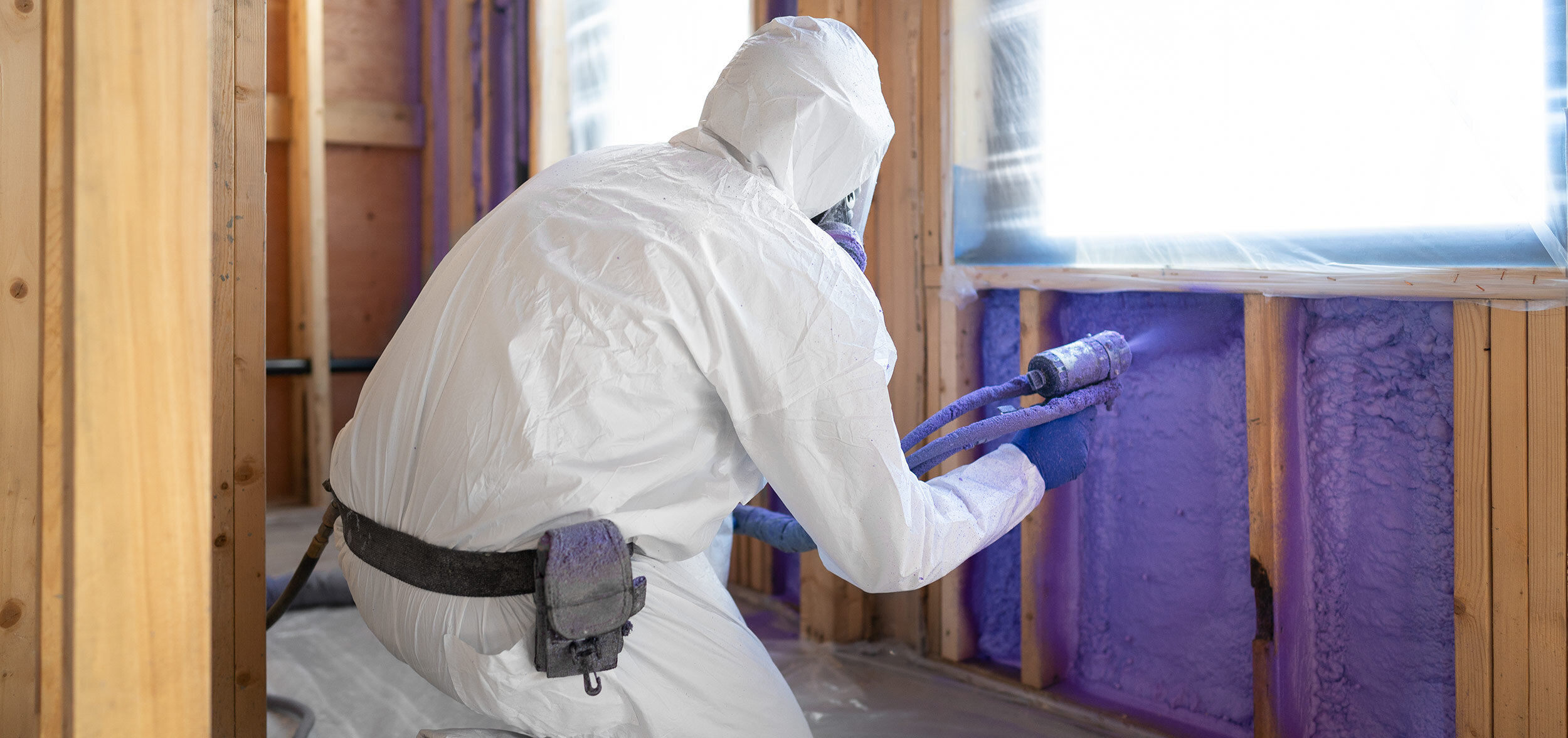
Professional Wall Insulation Services Improve Home Durability
Choosing wall insulation services that specialize in closed-cell foam can actually make your home stronger. Studies have shown that closed-cell foam can increase the racking strength of a wall by up to 300%. This is particularly helpful in areas that experience high winds or heavy snow loads on the roof.
Bonus Tip: Always ask for a site inspection before the work starts. A quality wall insulation contractor will check for moisture levels in the wood to ensure the foam bonds effectively for a lifetime.
Maintenance-Free Insulation Solutions For Plover Property Owners
One of the best things about this material is that it offers maintenance-free insulation solutions. You do not need to check on it or adjust it every few years. Once it is behind your drywall, it requires zero attention. It does not produce dust or break down into small particles that enter your air vents.
This makes it an excellent choice for families with allergies. Since it stays intact and does not harbor mold, it helps keep the indoor air quality high. You get a consistent climate inside your home regardless of how the weather changes outside.
Essential Items To Consider Before Choosing A Wall Insulation Company
Before you hire a wall insulation company, you should verify their experience with the local climate. A local wall insulation contractor will know how to handle the specific humidity levels in Plover. They should also provide a clear warranty on the application.
- Check for certifications from the manufacturer.
- Ask about the specific brand of foam they use.
- Verify that they have insurance for spray foam applications.
- Look for reviews from other property owners in the Plover area.
The spray foam insulation Plover, WI, market has many options, but the longevity of your project depends on technical skill. High-quality equipment and trained staff ensure the chemical reaction happens exactly as it should. This ensures the foam lasts as long as the building.
Bonus Tip: Consider Crawl Space Encapsulation alongside your wall project. Using closed-cell foam in the crawl space prevents floor drafts and stops rising dampness from affecting your home.
A Lasting Investment For Your Property
Investing in a high-quality thermal barrier is one of the most effective ways to improve a building. The Closed Cell Spray Foam Lifespan ensures that you will not have to deal with insulation problems again. It solves issues with drafts, high energy bills, and moisture in one single application. By choosing a material that does not degrade or sag, you protect the value of your property for the long haul. To determine if an upgrade is right for you, begin by evaluating your current energy costs and looking for signs of drafts or cold walls.
Find Professional Guidance For Your Next Insulation Project
If you are ready to improve your property, contacting a reliable wall insulation contractor is the best next step. Proseal Spray Foam offers professional expertise for residential and commercial projects in the Plover area. Their team provides wall insulation services, including Closed Cell Spray Foam, Open Cell Spray Foam, and Crawl Space Insulation, to help you save money. You can reach out for a free quote by calling (715) 227-6295 or emailing [email protected]. For more information on their service area and location, view their business profile at https://maps.app.goo.gl/vmbZHPYt5VfsHK9D9 to see how they help local property owners.
Common Questions About Spray Foam Performance
How does closed-cell foam handle extreme Wisconsin winters?
The material stays rigid and maintains its R-value even when temperatures drop well below zero. It prevents the cold air from leaking into the home, which keeps heating systems from working too hard.
Will the foam shrink or pull away from the studs over time?
When applied correctly by experts, closed-cell foam does not shrink. It has a high density and strong adhesive properties that keep it bonded to the wood for the life of the structure.
Is the foam resistant to mold growth in humid summers?
Yes, closed-cell foam is a non-organic material that does not provide a food source for mold. It also blocks moist air from reaching cold surfaces where condensation and mold usually form.
Does the insulation emit any odors after it has cured?
Once the foam has fully cured, which usually takes about 24 hours, it is completely inert. It does not off-gas or produce smells for the remainder of its lifespan.
Can closed-cell foam be used in existing walls?
It is most effective in open wall cavities during new construction or remodeling. For existing walls, professionals often use Dense Pack Cellulose or specialized injection foams to achieve similar goals without removing drywall.