


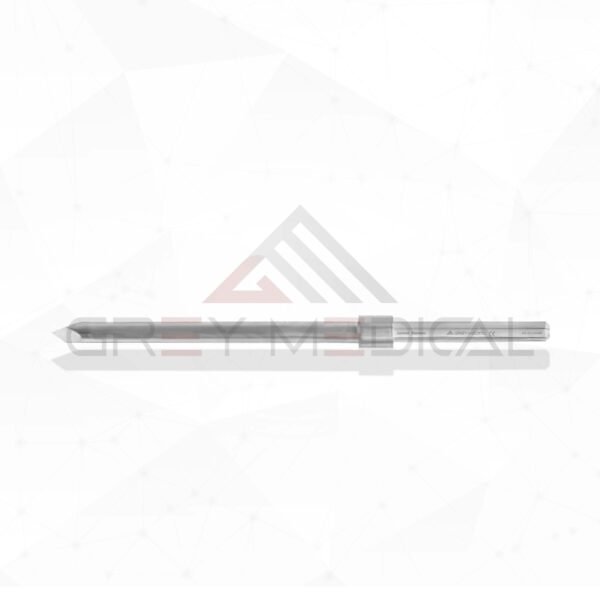
Bone pins are a core part of orthopedic surgical instrumentation. They help surgeons stabilize fractures, guide fixation, and apply skeletal traction with speed and control. Though simple in appearance, these devices play a major surgical instrument set role in trauma care, fracture management, and temporary or definitive fixation across many procedures.
Key Takeaways
- Bone pins are orthopedic devices used for fracture fixation, skeletal traction, and temporary stabilization during surgery.
- Common types include Steinmann pins and Kirschner wires (K-wires).
- They vary in diameter, length, point style, and material based on the procedure and bone involved.
- Trocar points and diamond points are common tip styles, each designed for different insertion needs.
- Bone pins are often made from stainless steel or titanium for strength, durability, and biocompatibility.
- Proper insertion technique, handling, and pin-site care are important for safety and performance.
- Cleaning, inspection, and sterilization must be thorough to maintain function and reduce infection risk.
What Are Bone Pins?
Bone pins are slender metal instruments used in orthopedic surgery to enter, hold, align, or stabilize bone. Some are used as temporary tools during reduction or fixation, while others remain in place for part of the healing process.
They are commonly used to:
- stabilize fractures
- hold bone fragments in alignment
- provide fixation for small bones
- support external fixation systems
- apply skeletal traction
- assist with intraoperative guidance and positioning
Bone pins are widely used in trauma surgery, hand surgery, pediatric orthopedics, and reconstructive procedures.
Main Types of Bone Pins
Not all bone pins serve the same role. The bone pins two best-known categories are Steinmann pins and Kirschner wires.
Steinmann Pins
Steinmann pins are thicker and stronger than K-wires. They are commonly used when greater strength is needed, especially in larger bones or traction setups.
They are often used for:
- skeletal traction
- temporary fixation in long bones
- external fixation constructs
- manipulation and control of bone fragments during surgery
Typical features include:
- larger diameter
- solid metal body
- greater rigidity
- suitability for deeper or heavier-duty applications
Kirschner Wires
Kirschner wires, or K-wires, are thinner wires used for fixation in smaller bones or where less bulk is needed. They are common in hand, wrist, foot, and pediatric procedures.
They are often used for:
- pinning small fractures
- temporary fixation
- guiding cannulated implants
- maintaining alignment during reduction
Common advantages include:
- fine diameter
- precise placement
- minimal hardware profile
- usefulness in small or delicate anatomy
Design Features of Bone Pins
Bone pins are designed for controlled bone entry and reliable fixation. Their glenoid retractor differences in size and tip geometry affect how they perform in surgery.
Diameter Variations
Diameter is one of the most important design features. The right size depends on the bone, patient anatomy, and the mechanical demands of the procedure.
Smaller diameters may be chosen for:
- small bones
- pediatric cases
- temporary fixation
- fine control in limited spaces
Larger diameters may be chosen for:
- long bones
- traction applications
- stronger fixation needs
- external fixation support
A pin that is too small may bend or fail. A pin that is too large may increase bone trauma or weaken the cortex.
Length Variations
Bone pins come in different lengths to match the depth of insertion and the anatomy being treated.
Length selection affects:
- reach through soft tissue
- purchase in bone
- ease of handling
- compatibility with traction or fixation frames
The surgeon must choose a length that provides stability without unnecessary protrusion or difficult control.
Point Styles
The tip shape affects how the pin enters bone and how much resistance it meets during insertion.
Trocar Point
A trocar point usually has a three-faceted sharp tip. It is designed for easier penetration into cortical bone.
Benefits of trocar points include:
- strong cutting ability
- easier bone entry
- efficient advancement through dense cortex
- common use in Steinmann pins and traction pins
Diamond Point
A diamond point has a more symmetrical cutting tip. It is often used when a balanced, precise entry is preferred.
Benefits of diamond points include:
- controlled penetration
- smooth advancement
- useful precision in smaller fixation applications
- common use in many K-wires
The ideal point style depends on surgeon preference, bone density, and the clinical goal.
Smooth vs. Threaded Designs
Some bone pins are smooth, while others include threads for improved purchase.
- Smooth pins are often easier to insert and remove
- Threaded pins may resist backing out and improve holding power in some cases
Threaded designs may be useful when migration is a concern, but they also require careful technique during insertion and removal.
Surface Finish
A smooth, consistent surface helps reduce friction and supports reliable insertion. Surface quality also affects cleaning and inspection.
Well-finished pins may offer:
- smoother passage through tissue and bone
- less drag during insertion
- easier debris removal after use
- better resistance to surface damage
Materials Used in Bone Pins
The material used in a bone pin affects strength, corrosion resistance, and compatibility with the clinical setting.
Stainless Steel
Stainless steel is widely used for bone pins and remains a standard material in orthopedic instrumentation.
Common benefits include:
- high strength
- good durability
- resistance to corrosion
- broad availability
- cost-effectiveness
Stainless steel pins are often selected for routine orthopedic use because they provide dependable performance in many settings.
Titanium
Titanium is also used in orthopedic devices and may be selected for specific clinical or material-related needs.
Common benefits include:
- strong biocompatibility
- lower weight
- excellent corrosion resistance
- favorable performance in some implant applications
Titanium may be preferred in cases where implant properties or surgeon preference support its use.
Primary Functions in Orthopedic Surgery
Bone pins support a wide range of orthopedic procedures. Their value comes from mechanical stability, procedural flexibility, and ease of use.
Fracture Fixation
One of the most common uses of bone pins is fracture stabilization. They can hold fragments in proper alignment while healing begins or while other implants are placed.
This may include:
- percutaneous pinning
- temporary stabilization during open reduction
- fixation of small bone fractures
- support in pediatric fracture care
Skeletal Traction
Steinmann pins are often used in skeletal traction, where a pin is placed through bone and connected to a traction setup.
This may be done to:
- align a fracture
- reduce muscle spasm
- maintain limb length
- stabilize a patient before definitive surgery
Temporary Intraoperative Stabilization
Bone pins are often used during surgery to maintain reduction while the surgeon places plates, screws, or other implants.
This helps with:
- holding alignment
- improving workflow
- reducing repeated manipulation
- supporting more accurate implant placement
External Fixation Support
Pins can serve as the bone interface for external fixation frames. In this role, they provide anchorage between the bone and the external device.
They are used in:
- trauma care
- damage-control orthopedics
- limb stabilization
- staged reconstruction
Guidance for Other Implants
K-wires are often used as guide wires for cannulated screws and similar systems. Their fine profile allows precise path creation before final implant placement.
Why Bone Pins Matter in Surgical Practice
The right pin can make a procedure more controlled, efficient, and predictable. In orthopedic surgery, even small differences in fixation tools can affect outcome and workflow.
Improved Stability
Bone pins help maintain alignment in unstable fractures and during reduction. This improves control throughout the procedure.
Minimally Invasive Fixation Options
Many K-wire techniques allow fixation through small skin openings. This may reduce soft tissue disruption in selected cases.
Procedural Flexibility
Surgeons can use bone pins for temporary fixation, traction, guidance, or definitive fixation depending on the case.
Speed in Trauma Settings
Bone pins are especially useful in urgent orthopedic care, where fast stabilization may be needed before more complex reconstruction.
Broad Clinical Use
Their usefulness across small bones, long bones, pediatric fractures, and external fixation makes them a standard part of many orthopedic instrument sets.
Common Procedural Applications
Bone pins are used across a wide range of orthopedic procedures.
Common examples include:
- hand and finger fracture pinning
- distal radius fixation
- pediatric supracondylar fracture stabilization
- foot and ankle fixation
- olecranon or patella traction setups
- tibial or femoral skeletal traction
- temporary reduction in long bone fractures
- external fixation for open fractures
The exact choice of pin depends on the anatomy, fracture pattern, and planned fixation strategy.
Proper Handling Techniques for Surgeons
Good results depend not only on the device, but also on technique. Bone pins must be selected and handled with care to reduce complications.
Before Use
Before a pin is inserted, the team should confirm that it is sterile, intact, and suitable for the case.
Check for:
- correct diameter and length
- proper point style
- straightness
- clean surface
- no corrosion or burrs
- compatibility with drills, chucks, or fixation systems
During Insertion
Pin insertion should be controlled and deliberate. Excess force or poor alignment can damage bone or surrounding tissue.
Best practices include:
- plan the entry point carefully
- protect nearby nerves, vessels, and tendons
- use appropriate imaging when needed
- insert with steady control rather than force
- avoid repeated passes through bone when possible
- monitor heat generation during drilling
- use the correct speed and pressure for the pin type and bone quality
Thermal injury can occur if drilling is too aggressive. Controlled technique helps protect bone and soft tissue.
Soft Tissue Protection
Pins pass through skin and soft tissue before reaching bone. Proper soft tissue handling matters throughout the procedure.
Important steps include:
- use safe corridors
- minimize tissue tension around the pin
- avoid tethering tendons or neurovascular structures
- support clean pin exit sites when external fixation is used
Intraoperative Control
During surgery, the surgeon should confirm that the pin is achieving the intended reduction or fixation goal.
This may involve:
- fluoroscopic confirmation
- checking depth and direction
- testing stability
- trimming or bending exposed wire ends when appropriate and safe
After Placement
Once the pin is in place, exposed ends must be managed carefully to reduce injury and contamination risk.
This may include:
- cutting to the required length
- applying protective caps when indicated
- confirming final position on imaging
- documenting the implant or pin details in the operative record
Pin-Site Care and Clinical Monitoring
When pins remain in place through the skin, pin-site care becomes an important part of postoperative management.
Teams should monitor for:
- redness
- drainage
- pain at the site
- loosening
- skin irritation
- signs of infection
Good pin-site management helps reduce complications and supports safe healing.
Maintenance and Sterilization Requirements
Reusable orthopedic instruments used to place bone pins must be maintained carefully. If reusable pins or related insertion tools are part of the system, they also require thorough reprocessing according to manufacturer instructions and facility policy.
Immediate Post-Use Care
After use, visible debris should be removed as soon as possible. Dried blood or bone material is harder to clean and can interfere with later inspection.
Cleaning
Cleaning should focus on all surfaces that may collect biologic material.
Pay close attention to:
- pin drivers
- wire chucks
- drill attachments
- cannulations if present
- hinges or moving parts in related instruments
- any textured gripping surfaces
If a reusable pin is reprocessed under approved protocol, its surface and tip must be cleaned fully before sterilization.
Inspection
Before sterilization and again before use, all related instruments should be inspected carefully.
Check for:
- tip damage
- dullness
- bending
- surface scratches
- retained debris
- corrosion
- mechanical wear in drivers or chucks
Any damaged component should be removed from service.
Sterilization
Sterilization must follow validated instructions for the specific device and material.
Key points include:
- clean thoroughly before sterilization
- use the correct packaging method
- avoid tray overload
- protect sharp points as needed
- confirm sterilization indicators
- store in a clean, dry area
Routine Maintenance
Orthopedic instrumentation performs best when routine maintenance is consistent.
This may include:
- function checks of pin drivers and wire instruments
- lubrication of approved moving parts
- scheduled tray inspection
- replacement of worn accessories
- removal of bent or damaged components
Common Problems to Watch For
Even a basic pin can create problems if selection, insertion, or care is poor.
Common issues include:
- pin bending
- migration or loosening
- thermal bone injury
- pin-site infection
- poor fixation due to wrong diameter choice
- soft tissue irritation
- damage to nearby structures from poor trajectory
- surface damage or corrosion in reusable systems
Recognizing these problems early can improve patient safety and procedural success.
Tips for Medical Students and Early-Career Clinicians
If you are learning orthopedic instruments, focus first on the link between design and function. Bone pins may look simple, but each variation serves a purpose.
Helpful learning points include:
- compare Steinmann pins and K-wires by size and use
- learn when trocar and diamond points are preferred
- understand why diameter affects strength
- observe how fluoroscopy guides placement
- study safe insertion corridors for common bones
- review how exposed pins are protected after surgery
- watch how instrument checks are done before and after sterilization
The more clearly you understand the role of each pin, the easier it becomes to choose and use the right one in practice.
Best Practices for Pin Selection
Choosing the correct bone pin depends on the anatomy, procedure, and fixation goal.
A few key factors include:
- bone size
- fracture pattern
- temporary versus definitive use
- need for traction or fixation
- required rigidity
- point style preference
- compatibility with available instruments
- expected duration of placement
The best choice is the pin that provides safe entry, reliable fixation, and good procedural control with the least unnecessary tissue disruption.
Conclusion
Bone pins are a vital part of orthopedic surgery. From fine K-wires used in small fracture fixation to stronger Steinmann pins used in traction and larger stabilization tasks, they support a wide range of clinical needs. Their design features, including diameter, length, tip style, and material, directly affect how they perform in bone and how they should be handled.
For surgeons, students, and instrument teams, understanding bone pins means more than knowing their names. It means understanding when to use them, how to place them safely, and how to maintain the instruments that support their use. In daily orthopedic practice, that knowledge helps turn a simple metal pin into a precise and dependable surgical tool.