


Few things trigger instant panic like seeing that temperature needle climb past the halfway mark while you’re cruising down the highway. Your first instinct might be to pull over immediately, but that’s not always the safest move. An overheating engine is serious business—it can warp cylinder heads, blow head gaskets, or even seize up entirely if ignored. The good news is that knowing how to respond calmly and correctly can prevent catastrophic damage. Whether you’re stuck in summer traffic or climbing a steep mountain road, understanding the right sequence of actions makes all the difference between a minor scare and a blown engine.
Recognizing the Early Warning Signs Before Disaster Hits
Your car rarely what to do when car overheats without giving you a few clues first. Beyond watching the temperature gauge, pay attention to subtle changes in how your vehicle feels and smells. A sweet, syrupy odor often signals leaking coolant, while a sharp burning smell might mean oil or plastic components are getting too hot. You might also notice steam or vapor rising from under the hood, reduced air conditioning performance, or a ticking sound from the engine bay. Sometimes the heater blows cold air even when set to warm—that’s another red flag. Learning to spot these early warnings buys you precious minutes to react before the engine reaches the danger zone.
The First Critical Steps When You Spot the Problem
Once you confirm your engine is overheating, resist the urge to slam on the brakes or shut off the engine immediately. Instead, turn off the air conditioner and crank the heater to its maximum setting. This sounds counterintuitive on a hot day, but the heater pulls heat away from the engine and into the cabin. Next, if you’re in stop-and-go traffic, try shifting into neutral and gently revving the engine to increase airflow through the radiator. The most important rule is this: do not turn off the engine while you’re still moving. A sudden shutdown can cause hot spots and uneven cooling, leading to cracked engine blocks. Keep rolling slowly until you can reach a safe stopping point.
Finding a Safe Place to Pull Over and Stop
Your immediate goal is to get off the road without making the overheating worse. Look for a wide shoulder, a rest area, or an exit ramp. Avoid stopping on blind curves or narrow bridges where other drivers might not see you. Once you’ve pulled over, shift into park and set the parking brake, but leave the engine running for another minute or two. This allows the coolant to continue circulating and the radiator fan to pull heat away. Then, turn off the engine completely. Crack your windows open for ventilation—steam from under the hood can contain toxic chemicals, so don’t breathe it in directly. Now comes the hardest part: patience.
Why You Should Never Open the Radiator Cap Immediately
This mistake sends thousands of people to emergency rooms every year. When an engine overheats, coolant temperatures can exceed 250 degrees Fahrenheit, and the cooling system becomes highly pressurized. Opening the radiator cap while it’s hot releases that pressure instantly, causing boiling coolant to erupt like a geyser directly onto your face and hands. Even after the engine is off, you need to wait at least thirty minutes for things to cool down. A good rule of thumb is that if you can place your hand flat on the hood without discomfort, it’s probably safe to proceed. Before touching anything, lay a thick rag or towel over the radiator cap and turn it slowly—only a quarter turn first to let any remaining pressure hiss out.
Checking Coolant Levels and Looking for Leaks
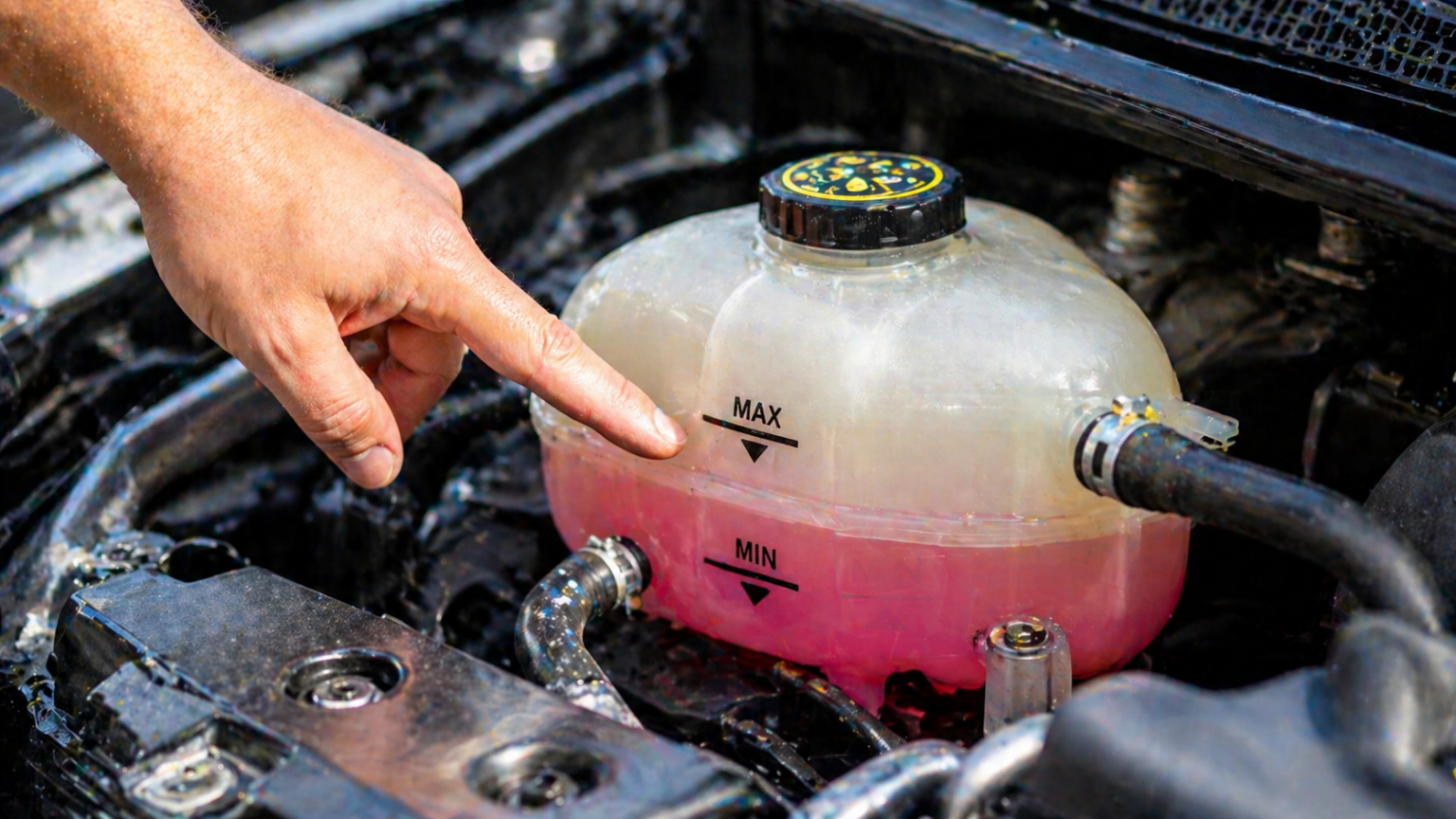
Once the engine has cooled sufficiently, pop the hood and take a careful look around. Check the coolant overflow reservoir first—it’s usually a translucent plastic tank with markings for minimum and maximum levels. If it’s low or empty, you’ve likely found the problem. Look for visible leaks underneath the car: green, orange, or pink puddles indicate coolant escaping from a hose, water pump, or radiator. Also inspect the serpentine belt; if it’s broken, your water pump isn’t spinning at all. If you have emergency coolant or even distilled water on hand, top off the reservoir slowly. Never pour cold liquid into a hot engine—thermal shock can crack the block. Plain tap water works in absolute emergencies, but it leaves mineral deposits behind.
Temporary Fixes to Get You to a Mechanic
You’ve cooled things down and added fluid, but that doesn’t mean the problem is solved. Overheating almost always has an underlying cause that needs professional attention. However, you might be able to drive a short distance to a repair shop or your destination. Keep the heater running full blast—uncomfortable as it is—because it acts as a secondary radiator. Drive gently, keep RPMs low, and watch that temperature gauge like a hawk. If it starts climbing again, pull over immediately and repeat the cooling process. Do not attempt highway speeds or long distances. A leaking hose can be temporarily wrapped with duct tape and a cloth, but that’s a desperate measure. The safest approach is calling for a tow truck, especially if you see steam, smell burning, or hear knocking noises.
What Happens If You Ignore an Overheating Engine
Some drivers convince themselves that a little heat is no big deal, and that’s exactly how minor issues turn into wallet-crushing repairs. Running an engine while overheated for even a few minutes can soften the aluminum cylinder head, leading to warping that destroys the seal between the head and engine block. A blown head gasket allows coolant to mix with oil, creating a milky sludge that no longer lubricates properly. In severe cases, pistons can weld themselves to cylinder walls—a condition called engine seizure. Replacing a head gasket costs around two thousand dollars, while a full engine replacement can run five thousand or more. Avoiding all that expense simply requires pulling over at the first sign of trouble and waiting for things to cool down.