


Metal buildings in Atwater, CA often suffer from constant interior condensation because of rapid temperature changes, poor insulation, and lack of proper moisture control. When warm air meets cooler metal surfaces, condensation forms quickly, especially in buildings without effective thermal barriers.
This article explains why condensation occurs so frequently in metal structures, how local climate conditions make the issue worse, and what practical steps help reduce moisture buildup. The information reflects real-world experience from insulation and building performance specialists, including the role of commercial insulation services in improving moisture control, energy efficiency, and overall building durability.
What Causes Condensation Inside Metal Buildings
Condensation forms when warm, moisture-filled air comes into contact with a cold surface. In metal buildings, this process happens more often due to how metal reacts to temperature changes.
Temperature Differences Between Interior and Exterior
Metal surfaces cool down quickly at night and heat up rapidly during the day. This creates constant temperature swings that increase condensation risk.
- Warm indoor air hits cold metal panels
- Moisture in the air turns into water droplets
- Repeated cycles lead to ongoing moisture problems
High Humidity Levels Inside Buildings
Even in relatively dry areas, indoor humidity can rise due to daily operations. Activities such as equipment use, storage, or human occupancy add moisture to the air.
- Warehouses and workshops often trap humidity
- Poor airflow prevents moisture from escaping
- Moisture accumulates on ceilings and walls
Bonus Tip
- Monitoring indoor humidity levels with simple sensors helps detect condensation risks early.

Why Metal Buildings Are More Prone to Condensation
Metal structures behave differently from wood or concrete buildings. Their physical properties make them more vulnerable to moisture buildup.
Low Thermal Resistance of Metal
Metal transfers heat quickly, which means it cannot maintain stable surface temperatures. This increases the likelihood of condensation forming when conditions change.
Lack of Built-In Insulation
Many metal buildings are constructed without sufficient insulation. Without a barrier, interior air directly contacts cold metal surfaces.
Tight Building Envelopes Without Ventilation
Modern metal buildings are often sealed tightly for efficiency. While this reduces air leakage, it can trap moisture inside if ventilation is not properly designed.
- Limited airflow allows humidity to build up
- Moisture has no escape path
- Condensation becomes a recurring issue
How Atwater Climate Conditions Increase Condensation Risk
Atwater, CA experiences hot days and cooler nights, especially during certain seasons. These temperature shifts create ideal conditions for condensation inside metal structures.
During the day, metal surfaces heat up significantly. At night, they cool down quickly, sometimes dropping below the dew point. This rapid shift causes moisture in the air to condense on interior surfaces.
Agricultural activity in the region can also contribute to airborne moisture and dust. When combined with temperature changes, this creates an environment where condensation forms more frequently.
Market data shows that buildings in regions with high daily temperature variation face up to 30% higher condensation risk compared to areas with stable climates.
Common Problem Areas Where Condensation Appears
Condensation does not form evenly throughout a building. Certain areas are more vulnerable due to exposure and airflow patterns.
Roof Panels and Ceilings
These surfaces are the most exposed to outdoor temperature changes. They cool down quickly at night, making them the primary location for condensation.
Wall Panels and Corners
Walls that face shaded or cooler areas often develop moisture buildup. Corners with limited airflow are especially prone to dampness.
Uninsulated Structural Components
Metal beams and supports can collect condensation if they are not insulated. These areas may drip water onto floors or stored materials.
Bonus Tip
- Regular inspection of roof panels helps catch early signs of condensation before damage spreads.
Comparing Solutions for Condensation Control
Different methods are used to reduce condensation in metal buildings. Each option offers varying levels of effectiveness.
| Solution | Effectiveness | Best Use Case | Limitations |
|---|---|---|---|
| Spray Foam Insulation | High | Full building coverage | Higher upfront cost |
| Fiberglass Insulation | Moderate | Budget projects | Prone to moisture issues |
| Vapor Barriers | Moderate | Moisture control layers | Requires proper installation |
| Ventilation Systems | Moderate | Airflow improvement | May not stop condensation alone |
| Dehumidifiers | Low to Moderate | Small spaces | Limited for large buildings |
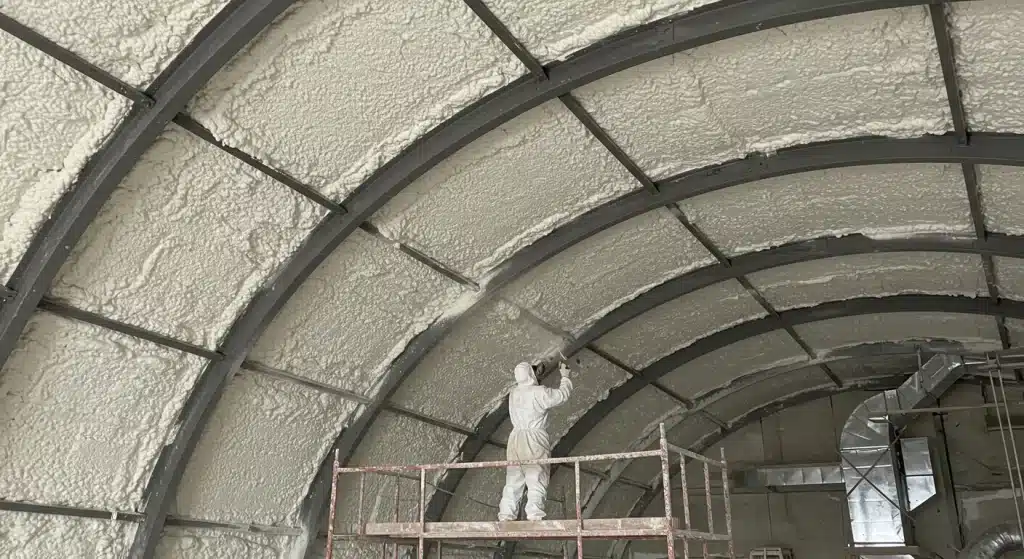
Spray foam stands out because it combines insulation with air sealing. This reduces temperature differences and limits moisture contact with metal surfaces.
How Insulation Helps Prevent Condensation
Proper insulation plays a central role in controlling condensation. It creates a barrier between indoor air and metal surfaces, reducing temperature differences.
Spray foam insulation is particularly effective because it adheres directly to metal panels. This eliminates air gaps and prevents warm air from reaching cold surfaces.
In addition to insulation, air sealing helps control humidity levels. When outside air infiltration is reduced, indoor moisture becomes easier to manage.
Buildings with upgraded insulation systems can reduce condensation issues by over 70%, according to industry observations.
What Should You Consider Before Addressing Condensation Issues
Before selecting a solution, building owners should evaluate several factors. Each building has unique conditions that influence the best approach.
The size and usage of the building play a major role. Larger facilities or those with high humidity activities may require more advanced solutions.
Existing insulation and ventilation systems should also be assessed. In some cases, improving airflow may be enough, while others require full insulation upgrades.
Budget considerations matter as well. While some solutions have lower upfront costs, they may not provide long-term results.
Climate conditions in Atwater should always be part of the decision. Daily temperature swings make insulation and air sealing more valuable compared to temporary fixes.
Long Term Effects of Ignoring Condensation Problems
Ignoring condensation can lead to serious building issues over time. Moisture buildup affects both structural integrity and indoor conditions.
Water accumulation can cause corrosion on metal surfaces. Over time, this weakens the building structure and increases maintenance costs.
Moisture can also damage stored goods, equipment, and interior finishes. This is especially problematic for commercial and agricultural facilities.
Indoor air quality may decline as well. Persistent moisture creates conditions for mold growth, which can affect occupants and operations.
Key Takeaways for Managing Metal Building Condensation
Metal buildings face constant condensation due to temperature swings, humidity, and lack of insulation. These factors combine to create ongoing moisture issues if not addressed properly, which is why many property owners turn to professional insulation solutions in Atwater to effectively control moisture, stabilize indoor temperatures, and protect the structure over time.
Installing proper insulation, improving ventilation, and controlling indoor humidity are the most effective ways to reduce condensation. Evaluating building conditions and selecting the right solution helps ensure long-term performance.
Get Expert Help to Control Condensation in Metal Buildings with a Free Quote
Addressing condensation in metal buildings requires a combination of insulation expertise and understanding of local climate conditions. Professional evaluation helps identify the root cause and determine the most effective solution.
Supreme Spray Foam – Fresno provides insulation services designed to reduce condensation in metal structures. They assess building conditions, recommend suitable materials, and apply solutions that improve moisture control. For a free quote or consultation, they can be contacted at (559) 545-0800 or [email protected]. Their team helps ensure buildings remain dry, efficient, and protected over time.
Common Questions About Metal Building Condensation
Why does condensation form more at night in metal buildings
Metal surfaces cool quickly at night, which causes warm indoor air to condense when it touches the cooler surface.
Can ventilation alone stop condensation?
Ventilation helps reduce humidity, but usually does not eliminate condensation without insulation.
Is spray foam better than fiberglass for metal buildings
Yes. Spray foam provides both insulation and air sealing, which makes it more effective for condensation control.
Does condensation damage metal buildings?
Yes. Over time, moisture can cause corrosion, structural damage, and issues with stored materials.
Can existing metal buildings be upgraded to prevent condensation
Yes. Insulation and moisture control systems can be added to existing structures to reduce condensation problems.