


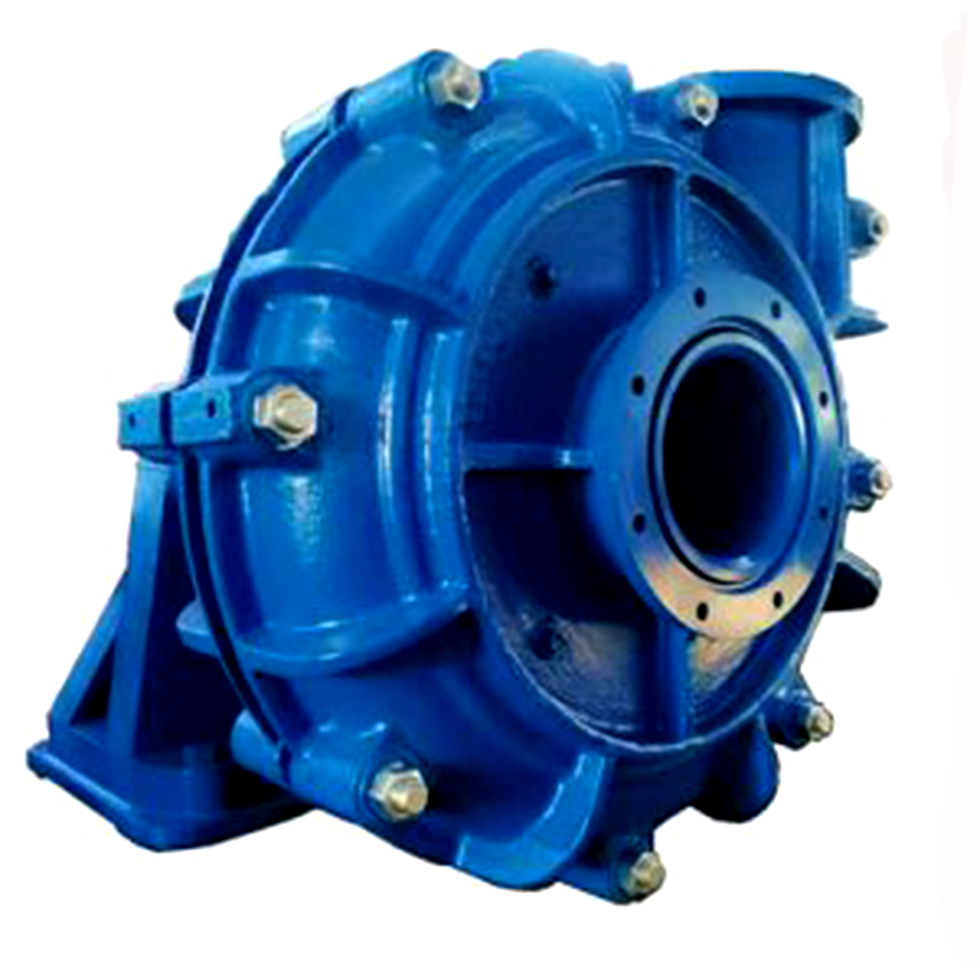
Some industrial applications are tough on equipment. Others are downright destructive. And then there are the truly punishing environments where slurry is both abrasive and corrosive at the same time—a combination that chews up ordinary pumps in weeks. CNSME has built a strong reputation precisely in this difficult middle ground. Their pumps do not just handle sharp, grinding particles, and they do not just resist chemical attack. They do both simultaneously, which requires a fundamentally different approach to material science and hydraulic design. For industries like fertilizer production, flue gas desulfurization, mineral sands processing, and chemical waste handling, the slurry pump supplier often contains acidic or alkaline liquids loaded with suspended solids. A pump that survives one but fails at the other is useless. CNSME engineers understand this dual threat better than most, and they have developed targeted solutions that keep production moving even when the mixture seems determined to destroy everything it touches.
Understanding the Double Threat of Abrasion Plus Corrosion
Here is what makes abrasive-corrosive slurry so uniquely challenging. Abrasion wears away material through mechanical action—particles scraping and impacting surfaces. Corrosion attacks through chemical reactions, dissolving protective layers and creating pits that accelerate further wear. When both happen together, they create a vicious cycle. Corrosion roughens the surface, which increases friction and trapping of abrasive particles. The abrasive particles then strip away any passive film that might have offered corrosion protection. Standard high-chrome irons, excellent for pure abrasion, can suffer from selective leaching in acidic environments. Rubber linings, superb for corrosion resistance, tear apart when hit with sharp, coarse particles. CNSME addresses this by offering specialized alloys like high-chrome with molybdenum and copper additions, which maintain hardness while improving corrosion resistance. They also provide ceramic-reinforced elastomers for applications where neither metal nor rubber alone would survive. The key is matching the material to the specific chemistry and particle characteristics of your slurry.
Material Innovations for Acidic Slurries with Solids
Acidic slurries present a particular headache because common wear materials behave poorly in low pH environments. CNSME has developed a family of high-chrome white irons specifically modified for acidic conditions. By adjusting the carbide structure and adding elements like vanadium and niobium, they create alloys that form a more stable passive layer even at pH levels as low as two. For extreme cases involving hydrofluoric or sulfuric acid at elevated temperatures, they turn to duplex stainless steels and super-austenitic alloys. These materials sacrifice some abrasion resistance compared to high-chrome but gain vastly superior corrosion resistance. The trick is finding the right balance. CNSME maintains a laboratory where they test customer slurry samples under controlled conditions, measuring both weight loss from abrasion and penetration from corrosion. This testing takes the guesswork out of material selection. A copper smelter handling acidic thickener underflow switched to CNSME’s modified high-chrome after burning through standard pumps every four months. The new pumps lasted over a year with minimal performance degradation.
Rubber and Polyurethane Solutions for Chemically Aggressive Environments
Not every corrosive slurry demands a metal solution. In fact, for many applications with fine, non-abrasive particles and aggressive chemistry, elastomer linings outperform metal significantly. CNSME offers natural rubber linings for alkaline slurries and mild acids, along with specialized synthetic rubbers like chlorobutyl and Hypalon for more aggressive chemicals. Polyurethane provides exceptional abrasion resistance combined with good chemical resistance to many hydrocarbons and mild acids. The beauty of elastomer linings is that they have no grain structure for corrosive agents to attack—the chemical must actually dissolve the polymer matrix, which happens slowly in properly selected materials. CNSME molds these linings into complex shapes that fit precisely inside the pump casing, creating a smooth flow path that reduces turbulence and wear. A phosphate fertilizer plant replaced their metal-lined pumps with CNSME’s rubber-lined models after struggling with rapid corrosion of high-chrome parts. The rubber not only resisted the acidic phosphoric acid but also handled the soft phosphate particles without tearing. Maintenance intervals stretched from two months to nearly eighteen.
Seal Strategies When Leakage Is Not an Option
In abrasive-corrosive applications, seal failure carries consequences beyond simple mess. A leaking seal in an acid slurry can damage nearby equipment, create serious safety hazards for operators, and trigger environmental reporting requirements. CNSME approaches sealing for these tough applications with extra caution. For most abrasive-corrosive services, they recommend double mechanical seals with a pressurized barrier fluid. The inner seal faces are typically silicon carbide or tungsten carbide, chosen for their hardness and chemical resistance. The barrier fluid is selected to be compatible with the slurry—usually a clean fluid that will not react if it leaks inward. A reservoir and pumping ring circulate the barrier fluid, keeping the seal faces cool and clean. For lower-pressure applications or where barrier fluid systems are impractical, CNSME offers expeller seals combined with a stationary gland packing as a backup. This hybrid approach provides two layers of protection. If the expeller sees a momentary pressure drop, the packing limits leakage until normal operation resumes.
Handling Variable Operating Conditions Without Failure
Abrasive-corrosive slurries rarely flow at perfectly steady rates and concentrations. Plants experience start-ups, shutdowns, grade changes, and upsets that send surges of different materials through the pump. These transient conditions can be more damaging than steady operation because they change the wear mechanism moment to moment. CNSME builds robustness into their pumps specifically for these unpredictable moments. Their impeller vanes have generous radii at the inlet to prevent particle impingement during low-flow conditions. The casing includes sacrificial wear indicators that show when liner thickness approaches minimum, even if the wear pattern is uneven. Shaft sleeves are hardened and replaceable, so the shaft itself never sees abrasive or corrosive exposure. Bearing housings are sealed with labyrinth systems that keep out both dust and chemical vapors. These design features mean that when the upstream process hiccups, the pump keeps running rather than becoming another problem to solve.
Real-World Success in Flue Gas Desulfurization
One of the most challenging abrasive-corrosive applications anywhere is flue gas desulfurization in coal-fired power plants. The slurry is gypsum crystals suspended in a mild sulfuric acid solution, with a pH around five and temperatures reaching sixty degrees Celsius. The crystals are sharp and moderately hard, while the acid slowly attacks most metals. CNSME has supplied hundreds of pumps for this exact service. Their approach combines a high-chrome alloy with carefully controlled carbide morphology, plus a closed impeller design that minimizes recirculation and particle degradation. The shaft seal uses a double mechanical arrangement with a water flush that prevents gypsum from packing around the seal faces. Power plant maintenance teams report that CNSME pumps routinely achieve liner lives of twelve to eighteen months, compared to six months for general-purpose slurry pumps. The difference comes from understanding both the abrasion from gypsum crystals and the corrosion from sulfurous acid, then engineering a solution that addresses both without compromise.
Making the Right Choice for Your Dual-Threat Application
If your slurry combines sharp solids with aggressive chemistry, you cannot simply buy the same pump your neighbor uses for sand and water. CNSME recommends starting with a thorough analysis of your slurry—particle size distribution, particle hardness, pH, temperature, and any unusual chemicals present. From there, their engineering team works through material options, seal configurations, and hydraulic sizing to arrive at a solution that balances wear life, cost, and reliability. The upfront investment in a properly specified pump pays back quickly through reduced downtime, fewer emergency repairs, and predictable maintenance schedules. For plant managers tired of pumps that fail from abrasion, corrosion, or both, CNSME offers a proven path forward. Their pumps do not just survive in abrasive-corrosive environments—they thrive, delivering the steady, reliable performance that keeps production targets within reach.