


Indian Summers Are Not Gentle on Home Exteriors
The Stone Evolution works with homeowners and builders across India who want exteriors that actually hold up — not just ones that look good on day one.If you have watched painted walls blister in May or seen tiles crack after a few monsoon cycles, you know how brutal the Indian climate can be. The temperature difference between a hot afternoon and a cool night puts real stress on exterior surfaces. That is where using good quality natural stone wall cladding tiles for your home exterior stops being a design choice and starts being a practical one.
Stone has been used on buildings in hot climates for centuries. There is a reason old havelis and temple walls in Rajasthan are still standing. The material does not expand and contract as dramatically as synthetic alternatives, and it does not trap heat the way dark cement or metal cladding can.
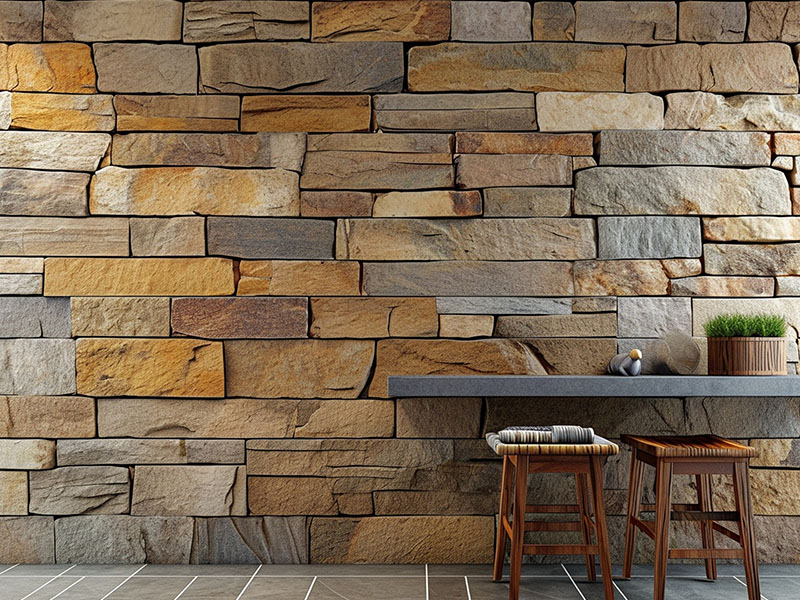
What Makes Stone a Good Fit for Indian Heat
Natural stone has low thermal conductivity. That means it absorbs heat slowly and releases it slowly. On a 42°C afternoon, a stone-clad wall stays cooler to the touch than brick or concrete plastered in reflective paint. Inside the house, that translates to lower surface temperatures and less pressure on your cooling system.
Beyond the physics, stone does not fade. UV exposure breaks down most surface coatings over time, but stone keeps its appearance without repainting or refinishing. Sandstone, slate, quartzite, and stacked stone panels all perform well outdoors in Indian weather — each with slightly different textures and price points.
One thing worth knowing: not all stone performs equally. Dense stones like quartzite and granite absorb less water than more porous options like certain sandstones. In coastal or high-humidity regions, this matters. A good supplier will tell you the water absorption rate for each stone type before you buy.
How to Choose the Right Stone for Your Climate Zone
India has several climate zones, and the right cladding in Chennai is not necessarily the right choice in Shimla.
In hot and dry zones — most of Rajasthan, Gujarat, and parts of Maharashtra — sandstone and slate work well. They are locally available in many areas, which keeps costs down.
In humid coastal zones — Kerala, coastal Karnataka, Goa — you want a denser stone with lower water absorption. Quartzite and certain granites handle the moisture better.
In composite climates with both hot summers and cold winters, like Delhi or Pune, thermal cycling is the bigger concern. Go for stones with tighter grain structure, installed with the right gap-filling compound to allow for minor expansion.
Thickness matters too. For exterior cladding, 18mm to 25mm is a common range. Thinner panels are lighter and easier to install but may need more support on large wall areas.
Installation and Long-Term Upkeep
Stone cladding is not a DIY job for most people. The adhesive selection, the surface preparation, and the grouting all affect how long the installation lasts. A badly installed stone wall can develop moisture ingress issues within two or three monsoons.
The good news is maintenance after proper installation is low. A yearly wash and occasional sealing for more porous stones is usually enough. You do not need to repaint, you do not need to re-coat. The wall just sits there, season after season.
If a tile cracks due to impact damage, individual pieces can be replaced without redoing the whole section. That is something you cannot say about most other exterior finishes.
Why The Stone Evolution
The Stone Evolution sources stone from verified quarries with consistent quality checks on density, absorption rate, and finish. They work with residential projects, commercial facades, and large builder projects. The team will give you honest guidance on which stone suits your region and building type — not just whatever is in excess inventory.
They also handle custom sizing and surface finishes, which matters if your architectural drawings call for something specific. Same-stone consistency across batches is something many buyers overlook until they are halfway through a project.
Wrapping Up
Stone is not the cheapest exterior material upfront. But for a country with the climate India has, it earns its cost over time. Less maintenance, no repainting, better heat performance, and an appearance that does not date badly.
If you are building or renovating and want an exterior that works with the Indian climate rather than against it, natural stone is worth a serious look.
FAQs
Is natural stone wall cladding suitable for all regions of India? Yes, but the stone type matters. Dense stones like quartzite and granite suit coastal and humid areas. Sandstone and slate work well in dry regions. Ask your supplier about water absorption ratings before finalizing.
How thick should exterior stone cladding tiles be? For most exterior applications, 18mm to 25mm thickness works well. Thicker panels add weight but offer better durability on large exposed walls.
Does stone cladding help keep interiors cooler? Stone has low thermal conductivity, which means it absorbs and releases heat more slowly than materials like concrete or brick. This can help reduce surface temperatures on walls, especially in direct sun.
How often does stone cladding need maintenance? Minimal maintenance is needed after proper installation. An annual wash and occasional sealing for porous varieties is typically enough. No painting or coating is required.
Can individual tiles be replaced if damaged? Yes. One of the practical advantages of stone cladding is that damaged sections can be replaced tile by tile without disturbing the surrounding installation.