


In today’s data-driven landscape, businesses increasingly rely on data analysis to enhance decision-making and propel growth. Business analytics (BA) plays a crucial role in helping organizations maximize the value of their data. If you want to excel in this career path, then it is recommended that you upgrade your skills and knowledge regularly with the latest Business Analytics Course in Chennai.
What is Business Analytics?
Business analytics refers to the strategic application of statistical analysis, data mining, predictive modeling, and other methodologies to assess historical data and generate actionable insights. These insights are vital for refining decision-making processes, optimizing operations, and determining strategic goals.
Key Components of Business Analytics
Descriptive Analytics
- Summarizes historical data to provide insight into past performance.
- Techniques include reporting, data visualization, and dashboards.
Diagnostic Analytics
- Investigates the reasons behind specific events by analyzing previous performance.
- Utilizes methods such as root cause analysis and data correlation.
Predictive Analytics
- Employs statistical models and machine learning to forecast future trends.
- Helps organizations anticipate changes in customer behavior and market dynamics.
Prescriptive Analytics
- Offers actionable recommendations to improve outcomes.
- Often incorporates optimization algorithms and simulations for effective decision-making.
Challenges in Implementing Business Analytics
While business analytics offers numerous benefits, several challenges can hinder effective implementation:
1. Data Quality Issues
- Challenge: Incomplete, inconsistent, or inaccurate data can lead to misleading insights and poor decisions.
- Solution: Establish strong data governance policies, perform regular audits, and standardize data entry processes.
It’s simpler to master this tool and progress your profession with the help of Best Training & Placement program, which provide thorough instruction and job placement support to anyone seeking to improve their talents.
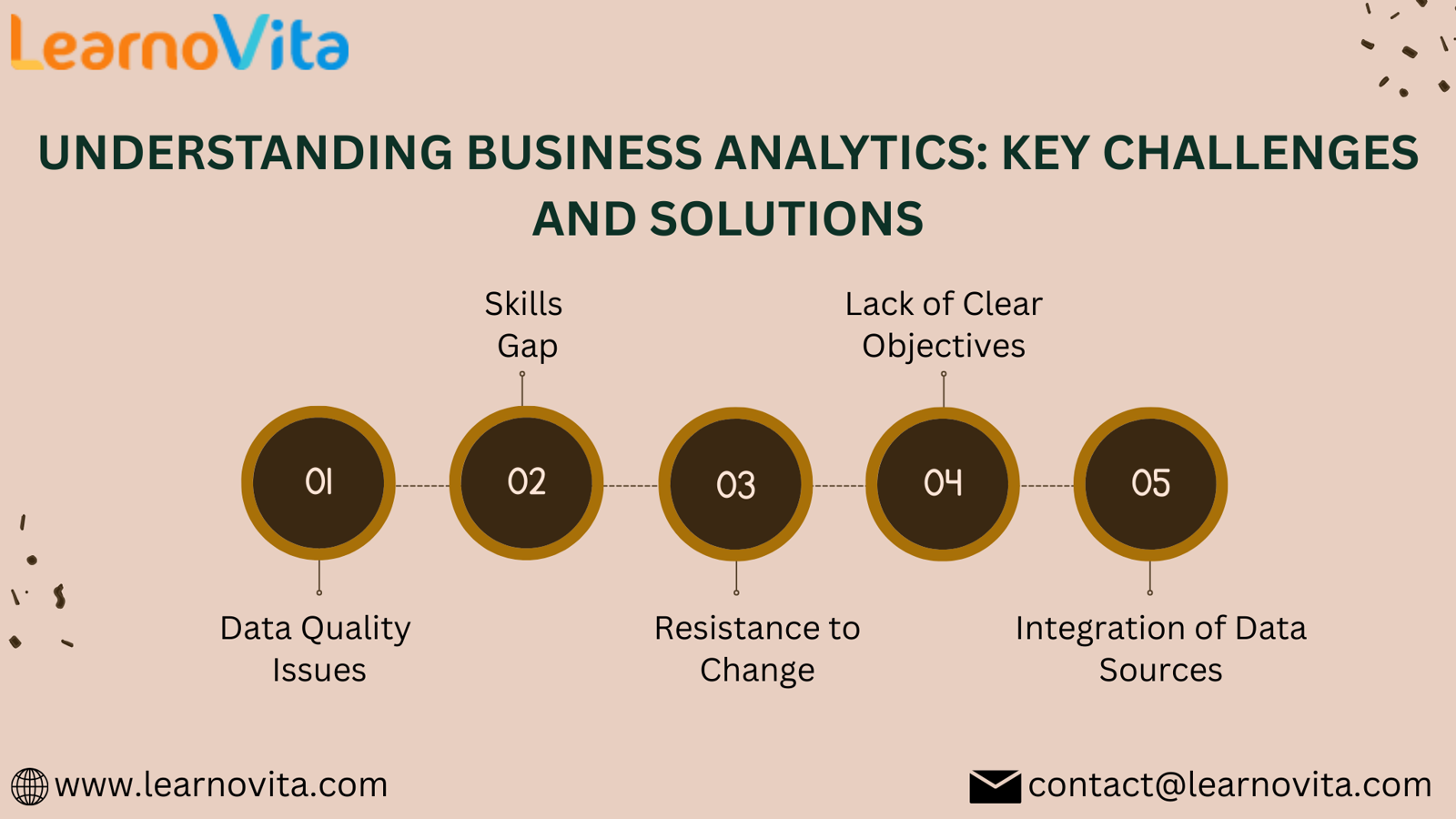
2. Skill Gaps
- Challenge: Organizations often struggle to find qualified individuals with the necessary analytics and data science expertise.
- Solution: Provide training programs for existing staff and partner with educational institutions to create internship opportunities for new talent.
3. Resistance to New Tools
- Challenge: Employees may hesitate to adopt new analytics technologies due to fears of disruption or unfamiliarity.
- Solution: Foster a data-driven culture by offering comprehensive training, explaining the benefits of analytics, and involving key stakeholders in implementation.
4. Data Integration Challenges
- Challenge: Compiling data from various sources can complicate efforts to achieve a comprehensive view.
- Solution: Utilize data integration tools and platforms to consolidate information into a unified framework.
5. Unclear Objectives
- Challenge: Analytics projects can lack direction when goals are not well-defined, leading to inefficient resource use.
- Solution: Set clear objectives and key performance indicators (KPIs) before starting analytics initiatives to ensure alignment with broader business strategies.
Conclusion
Business analytics is a vital tool for organizations aiming to extract valuable insights from their data, enhancing decision-making and fostering growth. By tackling challenges related to data quality, skill gaps, resistance to new tools, data integration, and unclear objectives, businesses can fully leverage the power of analytics. With effective strategies in place, organizations can successfully navigate the complexities of data analysis and achieve their desired outcomes.