


By Ian Kane
NR | 1h 40m | Action, Comedy, Crime | 1991
Hong Kong in the early 1990s had a filmmaking momentum that felt unstoppable. Legendary action director John Woo was perfecting his “gun fu” style of action cinema, sending bullets and fists flying across the screen with pure abandon. Performers, like Chow Yun-fat, best known for “Crouching Tiger, Hidden Dragon” (2000), kept walking out of explosions without losing their cool.
At the same time, a completely different style of comedy was taking over theaters. It came from a tradition known as “mo lei tau,” which means nonsensical comedy. The name alone warns you that logic should stay home, yet audiences kept showing up for more.
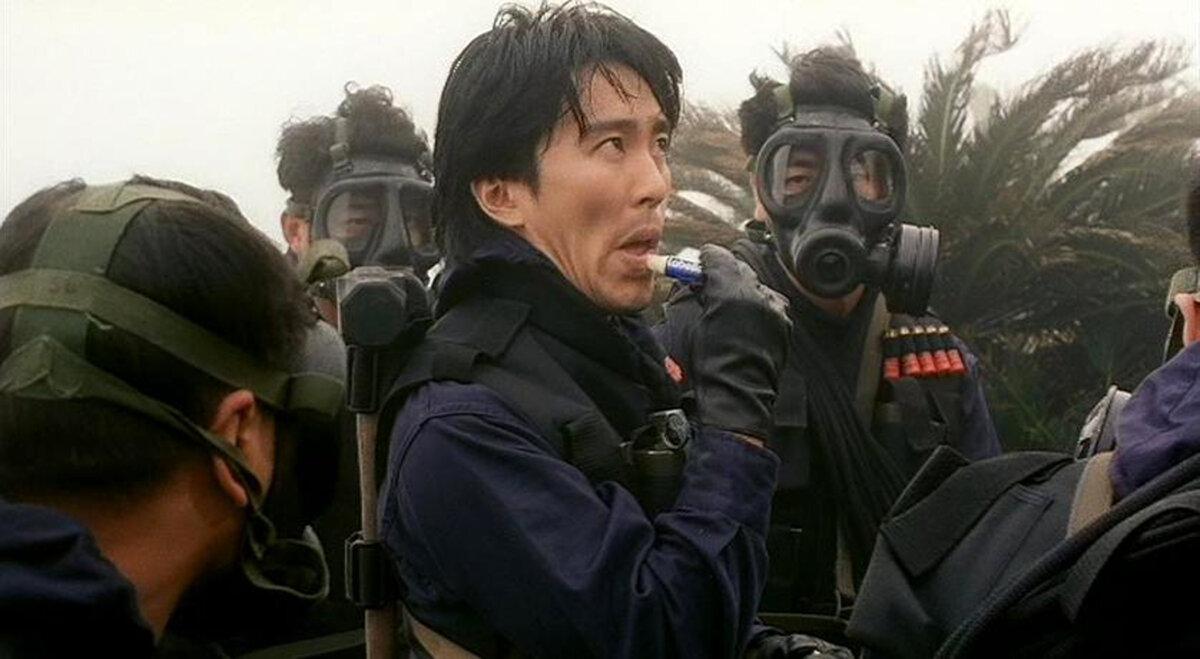
Star Chow (Stephen Chow) uses lip balm in a hostage situation, in “Fight Back to School.” GJW+
Mo lei tau emerged as Hong Kong filmmakers began mixing Cantonese wordplay with frantic slapstick, creating a comic voice that felt unmistakably local yet unexpectedly universal. Actor Stephen Chow took that energy, bottled it, shook it, and let it loose across years of hits. His various characters treated chaos like a trusted companion, and many of the slapstick bits always felt funny enough to make the viewer lean in for the next surprise.
“Fight Back to School” was released in 1991, the same year Chow starred in “Tricky Brains,” and both films show him at the peak of his comic agility. In “Fight Back to School,” his performance tosses the viewer into a world where a police officer goes undercover at a school; this creates a setup with endless chances for slapstick disasters and wild sight gags.
Some mo lei tau routines can feel tied to Cantonese wordplay or social rhythms that don’t necessarily translate with ease. This film sidesteps that hurdle by leaning on timing and visual gags that speak for themselves. The result is a comedy that bridges cultures without losing its homegrown spirit.
Related Stories
Viewers get the fun of watching Chow bend school hallways to his rhythm. Film fans get a friendly reminder of how rich Hong Kong cinema was during that era. The film sits right in the center of that cinematic moment. “Fight Back to School” still works today because the humor moves fast and never lets up.
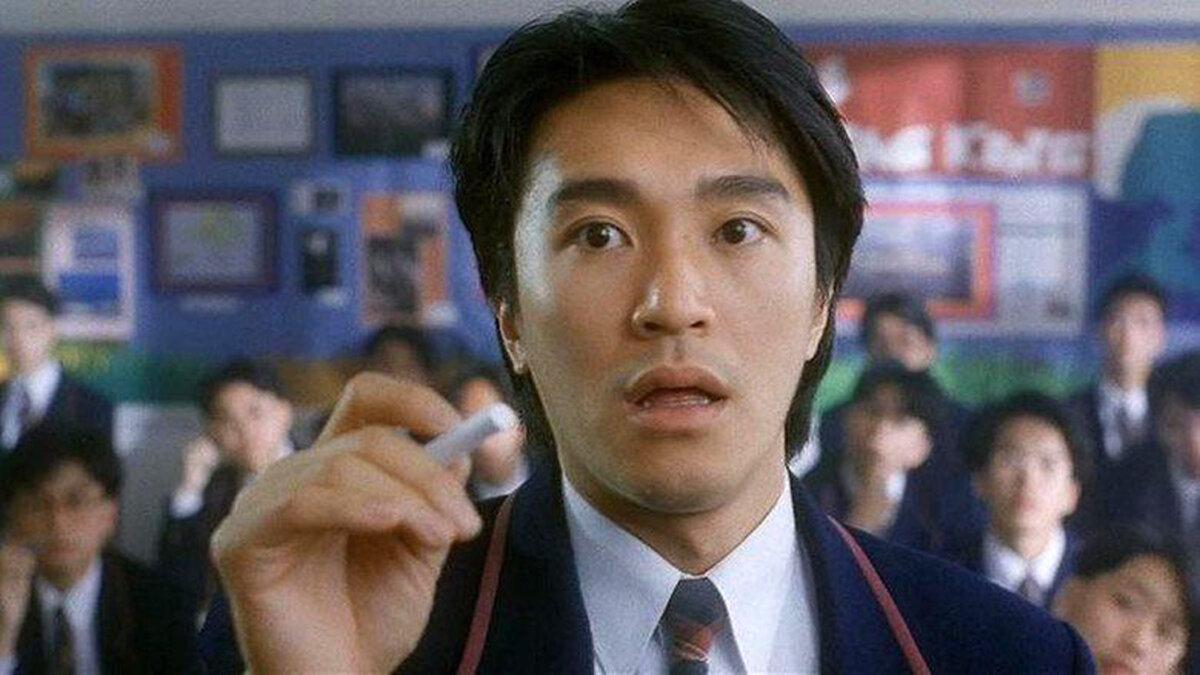
Star Chow (Stephen Chow) goes undercover as a student, in “Fight Back to School.” GJW+
Undercover Shenanigans
The movie opens with a raid so intense it looks like a John Woo actioner. Officers with Hong Kong’s Special Duties Unit (SDU) move in tight formation, while a “hostage” waits inside an abandoned building.
One of the cops, Star Chow (Stephen Chow), steps up like he owns the moment, then he repeatedly slows the squad’s momentum by applying eye drops, followed by lip balm for good measure. While his teammates are still reeling from his nonsensical hand signals, he charges forward and wipes out the bad guys.
The entire event turns out to be a training drill. Chow’s hero routine so stuns his superiors that they ship him off to an undercover assignment at an elite Hong Kong school as punishment.
His mission is to track down a stolen police revolver. However, he spends most of his time wrestling with classroom hijinks, bossy teachers, and students running schemes between periods. His colleague Uncle Tat (Ng Man-tat), posing as a counselor, tries to keep him on track, although Star Chow treats the job like a freestyle comedy audition.
In the middle of the fiasco, he forms a connection with Miss Ho (Sharla Cheung), whose kindness complicates his already fragile cover. He soon discovers that the school is its own hazardous battleground; how he stumbles through it delivers the film’s funniest material.
Hong Kong Comedy in Full Bloom
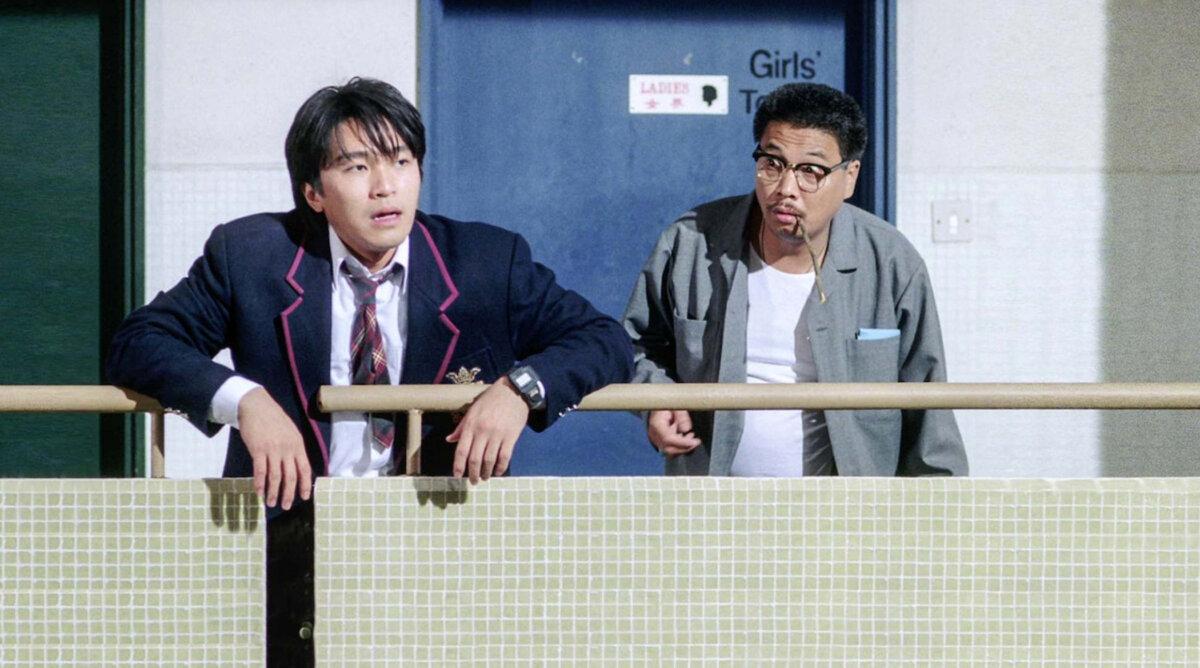
Star Chow (Stephen Chow) and Uncle Tat (Ng Man-tat) play off each other well, in “Fight Back to School.” GJW+
Watching the character Chow wander through hallways he barely understands reminded me why actor Chow became such a force in 1990s Hong Kong cinema. The movie gives him a playground of teachers, students, and awkward undercover duties. He treats each moment like a chance to outdo himself in pure comic invention. Chow shifts between confidence and confusion so fast you start to wonder how he ever made it through police training.
The supporting cast gives the proceedings a comfortable rhythm. Tat plays the long-suffering elder partner who tries to herd Chow toward something vaguely resembling professionalism. Their chemistry powers half the movie, especially when Chow derails a plan before his partner even finishes explaining it.
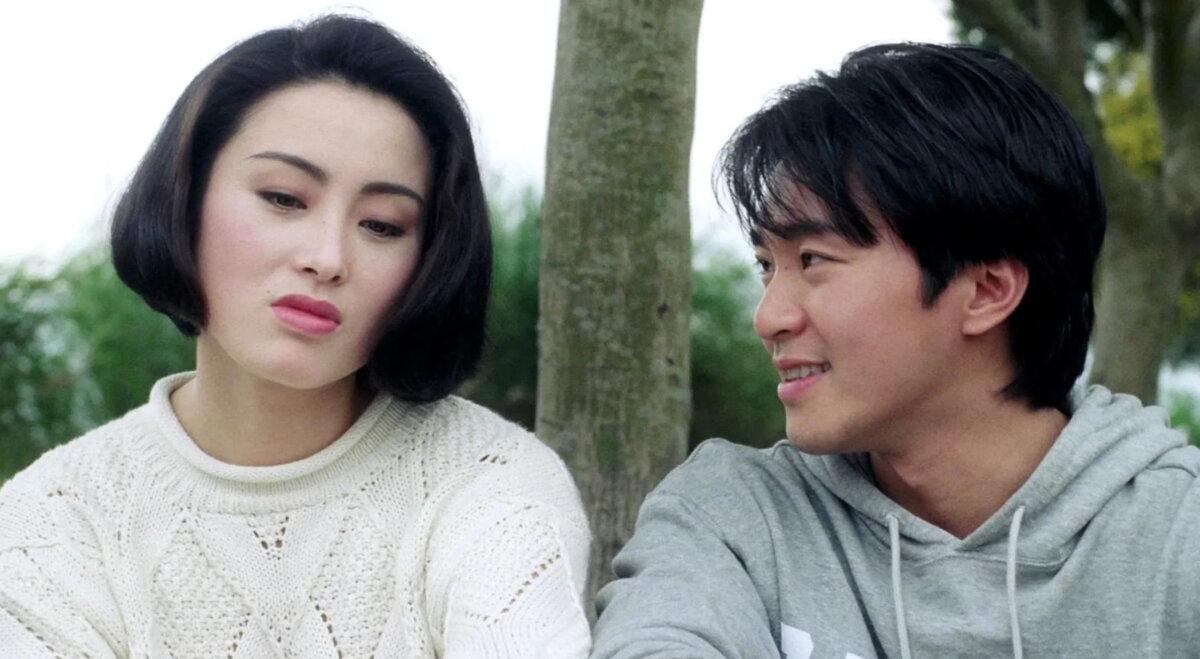
Miss Ho (Sharla Cheung) and Star Chow (Stephen Chow), in “Fight Back to School, .” GJW+
Cheung adds a feminine presence that softens the sharp edges of the story, and her scenes with Chow feel genuinely pleasant without slipping into overdone sappiness.
“Fight Back to School” doesn’t feature massive set pieces or elaborate special effects. It relies on the simple joy of watching a grown man fail spectacularly at impersonating a teenager while trying to solve a case he barely understands. That simplicity carries a lot of charm, especially when mixed with the film’s rapid-fire humor.
By the time the credits roll, the film still works because it invites the viewer to have fun without overthinking anything. Stephen Chow treats each scene like a dare, and the movie rewards that energy with a steady stream of playful mishaps.
If you enjoy Hong Kong cinema from that golden stretch of the 1990s, this one still delivers a good time.
“Fight Back to School” is available on GJW+
‘Fight Back to School’ Director: Gordon Chan Starring: Stephen Chow, Sharla Cheung, Ng Man-tat Not Rated Running Time: 1 hour, 40 minutes Release Date: July 18, 1991 Rated: 3 1/2 stars out of 5
What arts and culture topics would you like us to cover? Please email ideas or feedback to [email protected]